The 2025 CIHR Institute of Aging Fellowship Prize of Excellence in Research on Aging
Each year, the Canadian Institutes of Health Research - Institute of Aging (CIHR-IA) recognizes the highest ranked postdoctoral trainee in the field of aging from the CIHR open postdoctoral competition as the CIHR-IA Fellowship Prize of Excellence in Research on Aging recipient.
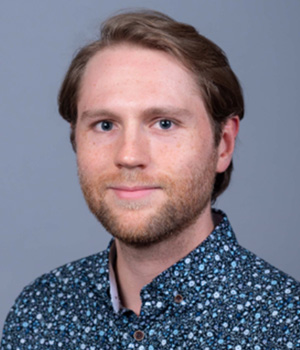
Recipient
Dr. Erik Jacques, Harvard University
Dr. Erik Jacques is currently a Postdoctoral Research Fellow at Brigham and Women’s Hospital and Harvard Medical School in Boston, MA. In order to study the biology of aging, he joined the lab of Dr. Vadim Gladyshev in September 2024 with the goal of interrogating cell-type aging trajectories in skeletal muscle using single-cell genomics. Dr. Jacques completed his undergraduate degree at the University of Ottawa with Dr. Emilio Alarcon and Dr. Erik Suuronen, and his PhD at the University of Toronto with Dr. Penney Gilbert. While in Toronto, Dr. Jacques combined the disciplines of tissue engineering and stem cell biology to study the age-compromised cell state of muscle stem cell quiescence, which then spurred his initiative to enter the field of geroscience. His work has been recognized by the Canadian Institutes of Health Research (CIHR), Mitacs, the Tissue Engineering and Regenerative Medicine International Society (TERMIS), the Terrence Donnelly Centre for Cellular & Biomolecular Research, and others. Dr. Jacques is committed to advancing our understanding of skeletal muscle aging and improving overall healthspan.
Research Summary
The decline in skeletal muscle mass and strength in old age is a chronic disease defined as sarcopenia, and it is a major determinant of quality of life and loss of independence. To-date, it is unclear which molecular changes to the cells within the tissue associate with muscle weakness, and whether some cell populations are particularly susceptible or why. Dr. Jacques’ research will address these questions by leveraging single-cell genomics for biomarker discovery in skeletal muscle. Recent advances in aging research have enabled the quantification of aging signatures using machine learning algorithms that analyze multiple molecular parameters in composite. However, most efforts have been using bulk tissue samples, thus limiting resolution and interpretability. Building on our group’s recently developed multi-species, multi-tissue model for transcriptomic aging signatures (with compatibility with single-cell gene expression), this research will adapt the framework and learn the signatures associated with age-induced muscle weakness. This will subsequently enable the study of sarcopenia at the cellular level. Analysis of pathways and intercellular communication networks will identify cell-type specific aging trajectories and vulnerabilities for therapeutic target. Moreover, the biomarkers developed will yield an improved understanding of sarcopenia onset and will be pertinent when evaluating new or existing interventions for prolonging healthy muscle function in the elderly.
- Date modified: