Connecting epigenetics, data science and collaboration to advance precision oncology
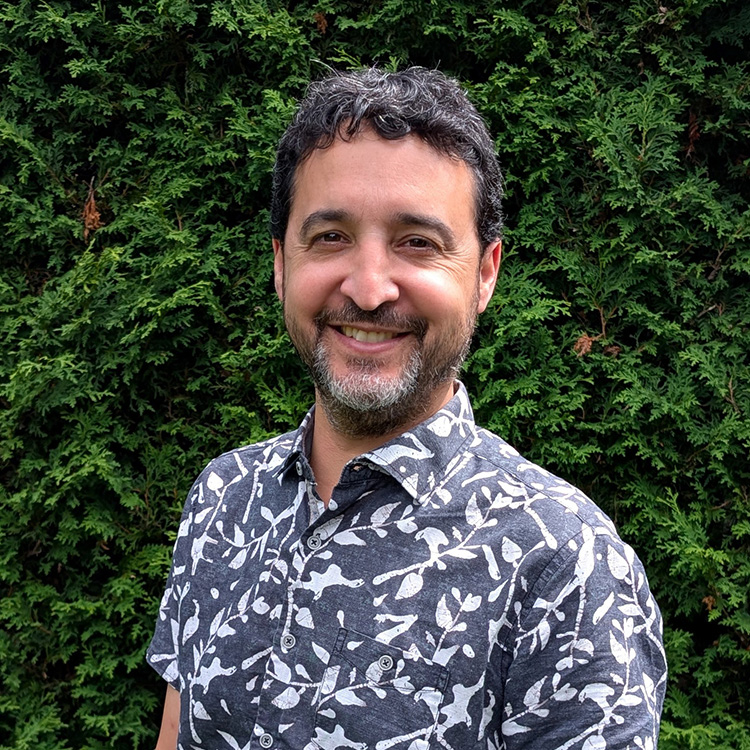
By combining epigenomic and clinical information with advanced computational approaches, Dr. Steve Bilodeau and collaborators are working to better understand how cancer develops and progresses, and how that knowledge will support more personalized cancer care.
Our understanding of cancer has evolved considerably over the years. Rather than viewing cancer as a static disease, researchers now understand it as a dynamic process shaped by genetic, epigenetic, clinical and treatment-related factors. As a result, each person's cancer can develop and respond to treatment differently.
This complexity is one reason researchers are increasingly turning to precision oncology, an approach that uses biological, clinical and lifestyle information about an individual and their cancer to guide more personalized care.
Genetics is only part of the picture. The environment and our behaviours can also influence how genes function through processes known as epigenetics. Unlike genetic changes, which alter the DNA sequence itself, epigenetic changes affect how genes are regulated without changing the DNA sequence. Chemical modifications known as epigenetic marks help control whether genes are turned on or off, allowing cells to produce the proteins they need to function.
Changes in these epigenetic regulatory processes can drive disease. Environmental and behavioural factors, including exposure to pollutants, stress and diet, can influence epigenetic regulation, with abnormal epigenetic patterns linked to cancer progression and other conditions.
For researchers, the challenge is not simply identifying these different influences, but understanding how they interact and change the course of disease.
“Improving health outcomes begins with the ability to identify risks and disease progression as early as possible. Our research seeks to develop predictive models that combine genomic, epigenomic, and clinical information to better understand how diseases emerge and evolve,” says Dr. Steve Bilodeau.
Dr. Bilodeau, a professor at Université Laval and researcher at the Centre de recherche du CHU de Québec–Université Laval, studies the transcriptional and epigenetic mechanisms that control cell identity during development and cancer progression. Working at the intersection of biology and data science, his team investigates how the organization of DNA within cells and the molecules that regulate gene activity work together to shape cellular identity and disease.
Rapid advances in technology have dramatically increased the amount and variety of biological information available to researchers. Epigenomics–the study of epigenetic changes across the genome—provides another layer of information about how genes are regulated. Combined with advanced computational approaches, these data can help researchers identify patterns and develop a more complete picture of how cancer develops and changes over time.
Dr. Bilodeau's team is developing computational and epigenomics approaches designed to predict clinical outcomes using complex biological and clinical datasets. “Our work focuses on bridging basic, translational, and clinical research by developing methods that connect molecular information, such as genetics, epigenomics, single-cell and spatial transcriptomics, with clinical data, including medical imaging and digital pathology,” explains Dr. Bilodeau. “By bringing these different perspectives together, we can build a more complete understanding of disease and accelerate the development of clinically meaningful discoveries.”
Building connections to advance epigenetics in Canada
Moving discoveries forward requires researchers across disciplines and institutions to combine expertise, technologies, data, and perspectives. This collaborative approach is at the heart of the Canadian Epigenetics, Environment and Health Research Consortium (CEEHRC), a CIHR-funded pan-Canadian initiative of which Dr. Bilodeau is an active member. The network connects researchers across Canada to strengthen collaboration in epigenetics and accelerate the translation of discoveries toward applications that could improve human health.
Through scientific meetings, shared research opportunities and training initiatives, CEEHRC helps build the multidisciplinary expertise needed to advance the field. The network also supports the next generation of scientists through educational programs, travel awards and opportunities to connect with researchers across disciplines and institutions.
CEEHRC's reach extends internationally through its involvement in the International Human Epigenome Consortium (IHEC), a global collaboration working to develop reference maps of the human epigenome in health and disease.
Translating discoveries also means making knowledge accessible beyond the research community. CEEHRC produces public-facing articles, educational resources, podcasts and social media content to increase awareness and understanding of epigenetics. For researchers, the network offers workshops, webinars and networking opportunities on emerging topics, including artificial intelligence in science and scientific communication.
Patient and caregiver perspectives are another important part of this research ecosystem.
“Patients and caregivers play an important role in shaping research priorities and activities. Their perspectives help ensure that research questions address real-world needs and that findings are relevant to the people most affected by health conditions. We view patients and caregivers as partners whose lived experiences strengthen the quality, relevance, and impact of our work,” says Dr. Bilodeau.
By integrating biological and clinical information and bringing together expertise and perspectives from across the research ecosystem, Dr. Bilodeau and collaborators are working toward a better understanding of how cancer develops, progresses and responds to treatment.
Their research aims to improve the ability to anticipate disease trajectories and treatment responses. In the longer term, these approaches could support earlier and more accurate diagnoses and more personalized treatment decisions, helping advance precision oncology toward its ultimate goal of providing the right treatment to the right patient at the right time.
Additional Resources
- Dr. Steve Bilodeau’s LinkedIn
- Dr. Steve Bilodeau’s Biography – Université Laval
- Canadian Epigenetics, Environment and Health Research Consortium (CEEHRC)
- Epigenetics CEEHRC podcast
- Understanding epigenetics (general public)
- Date modified: