Evaluation of the Vanier Canada Graduate Scholarships Program
Final Report
February 2026
At the Canadian Institutes of Health Research (CIHR), we know that research has the power to change lives. As Canada's health research investment agency, we collaborate with partners and researchers to support the discoveries and innovations that improve our health and strengthen our health care system.
Canadian Institutes of Health Research
234 Laurier Ave West, 18th Floor
Address Locator 4809A
Ottawa, Ontario K1P 6K6
This publication was produced by the Canadian Institutes of Health Research. The views expressed herein do not necessarily reflect those of the Canadian Institutes of Health Research.
Acknowledgements
Special thanks to all participants in this evaluation – tracker survey and end of award report respondents. Also, thank you to those who supported the evaluation: the Vanier Banting Secretariat (VBS) and CIHR Funding Analytics.
The Vanier CGS Evaluation Team
Ellie Radke, Shevaun Corey, Alice Ndayishimiye, Michael Goodyer, and John-Patrick Moore.
For more information and to obtain copies, please contact: evaluation@cihr-irsc.gc.ca.
Table of Contents
- At a Glance
- Purpose, Scope, Approach, and Context
- Results
- Conclusions
- Recommended Actions
- Appendices
At a Glance
Purpose
Targeted, rapid evaluation to maintain compliance with Policy on Results and assess the Vanier Canada Graduate Scholarships (CGS) program's long-term outcomes to inform Canada Research Training Award Suite (CRTAS) planning and implementation.
Key Results
- The Vanier program has had a positive but modest impact on recipients' career outcomes, recognition, and research contributions as career trajectories were not markedly different than applicants consistent with findings from previous evaluations.
- The design of the Vanier program limited inclusivity and international recruitment and affected the program's reach and impact highlighting the importance of a flexible, equitable design and monitoring barriers to access posed by quotas and nomination processes.
- Despite the Vanier program's modest incremental impact on recipient careers and recognition, there is a need for continued doctoral support to develop research leaders in Canada as well as the long-term tracking of the outcomes of CRTAS recipients and applicants.
Recommended Actions
- The CRTAS needs to monitor whether the changes made to improve inclusivity, access, and diversity reduce barriers.
- The CRTAS has retained specific design elements that posed challenges for the Vanier CGS Program (e.g., the quota and institutional review model). These elements should be assessed to ensure they are not limiting access.
- The CRTAS needs to establish performance baselines for the CGRS-D. The Vanier CGS Program evaluation data can inform these baselines.
- The CRTAS should ensure there is a mechanism in place to track trainees (including applicants) and link funding data across tri-agencies.
- The CRTAS Performance Measurement Strategy needs to include an end of award report along with 5-year follow ups as data sources to ensure availability of data for immediate, intermediate and longer-term outcomes.
Purpose, Scope, Approach, and Context
Long description
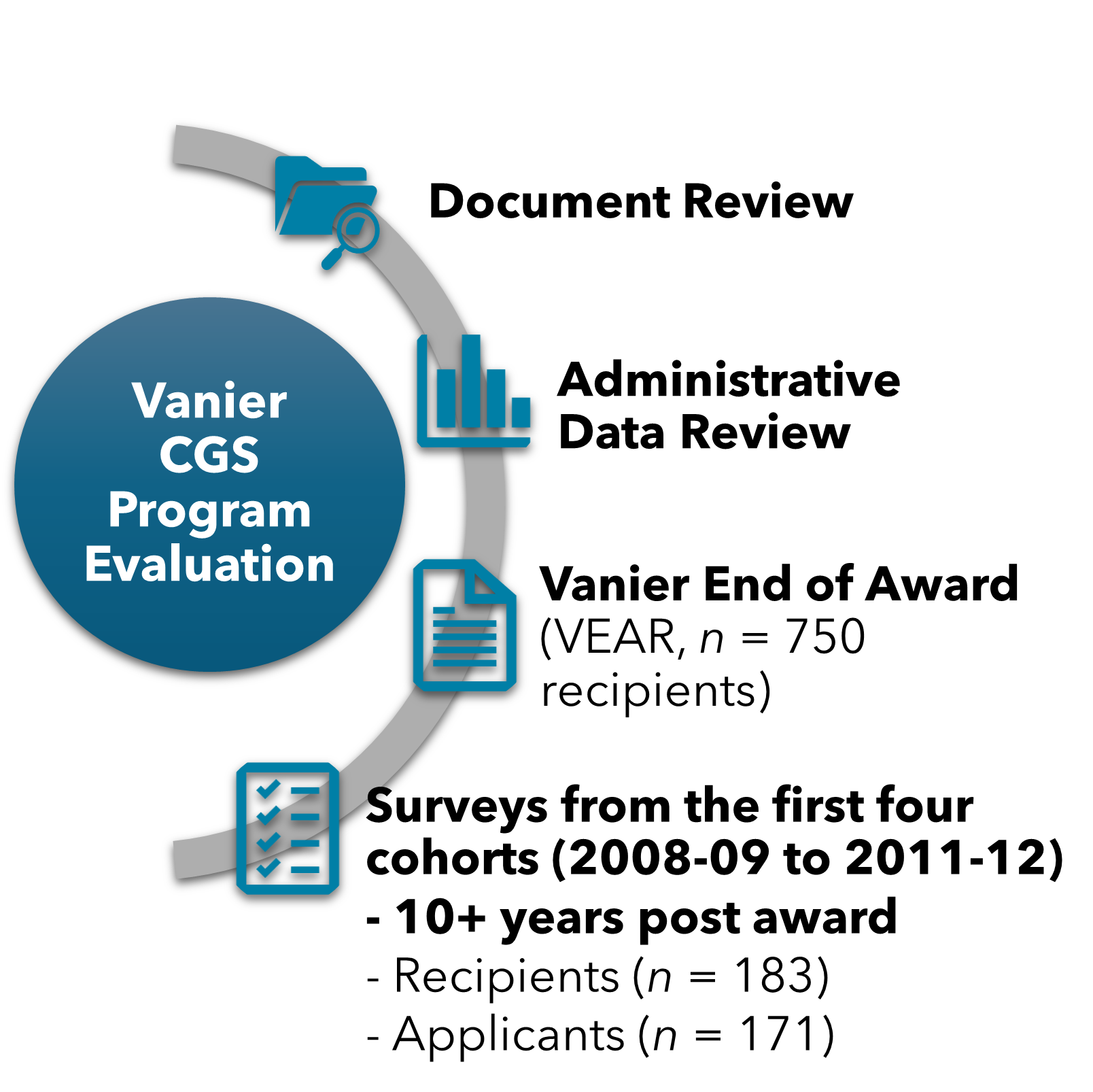
Vanier CGS Program Evaluation
Document Review
Administrative Data Review
Vanier End of Award
(VEAR, n = 750 recipients)
Surveys from the first four cohorts (2008-09 to 2011-12)
- 10+ years post award
- Recipients (n = 183)
- Applicants (n = 171)
- The purpose of this evaluation is:
- Meet commitment in Canada Research Training Award Suite (CRTAS) program authorities to ensure compliance with Treasury Board of Canada Secretariat's (TBS) 2016 Policy on Results per the Financial Administration Act.
- Understand Vanier CGS long-term outcomes to inform CRTAS planning, decision-making and implementation.
- This third evaluation of the Vanier CGS (2019-20 to 2024-25), that builds on the two previous evaluations (completed in 2014 & 2021), is a focused follow up to:
- understand lessons learned from the Vanier CGS program in addressing the need for doctoral support to strengthen Canada's research capacity; and,
- determine whether alumni are undertaking careers in Canada, applying their research skills, and being recognized for advancing research excellence.
- In March 2025, TBS approved that all tri-agency scholarship and fellowship programs be consolidated into a harmonized talent program, the CRTAS.
- The last Vanier CGS competition results were announced in May 2025.
Results
Lessons Learned from the Vanier CGS
While the Vanier CGS strengthened research capacity by supporting top scholars, evaluations of the program have consistently shown limited incremental impact between recipient and applicant outcomes.
Needs Addressed
- Provided funding for top-tier doctoral talent
- High award value ($50K) reduced financial burden, supported focus on research
- Funding for international students to study in Canada
- Enabled top-tier scholars to excel academically, undertake research careers, produce research, and advance professionally
Key Factors Contributing to Limited Differential Impact
- Program Design Constraints
- Design barriers limited international recruitment and domestic retention at the application stage:
- Quota and nomination model restricted applicant pool;
- Institutional nomination bias known candidates; and
- Leadership criterion inconsistently assessed.
- Top Tier Applicant Pool
- Vanier applicants (successful and unsuccessful) are among Canada's top doctoral candidates.
- Overlap with Other Scholarships
- Most unsuccessful applicants received alternative doctoral funding (e.g., CGS-D or agency-specific doctoral awards), allowing both groups similar ability to focus on research and leadership activities without financial constraints.
- Comparable Training Environments
- Recipients and applicants reported similar access to research, teaching, mentorship, and leadership opportunities.
- Both recipients and applicants reported that their Vanier CGS / doctoral training influenced their career choices, especially for research-intensive paths.
These findings highlight the importance of systematic data collection for long-term tracking with comparators to assess the incremental value of doctoral funding programs.
Doctoral Support Going Forward
The recently launched CGRS-D addresses some Vanier design limitations and embeds EDI considerations but maintained the quota and institutional review process that could restrict access.
- CRTAS/CGRS-D harmonizes previous doctoral awards into a single award and offers more awards at a slightly lower value ($40K) with less emphasis on prestige
- Enables Canadian students to study abroad, addressing Vanier's restrictions that limited international mobility
- Continues support for international students, with an allocation of up to 15%
- Direct application option for students at non-quota institutions, though it is unclear how the review process will be handled for institutions with quotas
- Removes leadership assessment criterion
- Embeds EDI measures including broader support for Indigenous applicants and research, plus targeted awards for Black doctoral scholars
The CRTAS is still in development and retains some design challenges identified in the Vanier evaluations (e.g., quota and review process) that will need to be monitored and assessed.
Research-related Careers
The Vanier CGS Program supports recipients to undertake research careers in Canada, primarily in research-intensive academic roles. But recipients' employment outcomes are similar to other funded doctoral students, suggesting the scholarship provides only a modest advantage.
- Majority of recipients and applicants working full-time
- 87% (n = 159) & 82% (n = 140)
- Most recipients and applicants work in Canada
- 80% (n = 146) & 74% (n = 127)
- Outside Canada: ~20% for both groups
- Most are in research-focused roles, more so for recipients than applicants
- 87% (n = 181) vs. 77% (n = 161)
- Recipients and applicants report that their positions are research-intensive
- Recipients: M = 4.01 (n = 158) & Applicants: M = 3.85 (n = 124)
- Both the Vanier CGS and other funding for doctoral studies matter
- Career influence: M = 4.22 (recipients, n = 174), 4.37 (applicants, n = 160)
- Career usefulness: M = 4.07 (recipients, n = 171), 4.40 (applicants, n = 161)
"It supported my training as a researcher, and positioned me very well to go do a successful postdoctoral position, that positioned me to obtain my current faculty position."
"My doctoral studies allowed me to get a postdoctoral researcher position, followed by a junior faculty position at a research hospital."
Source: Tracker Survey Data
Employment Sector
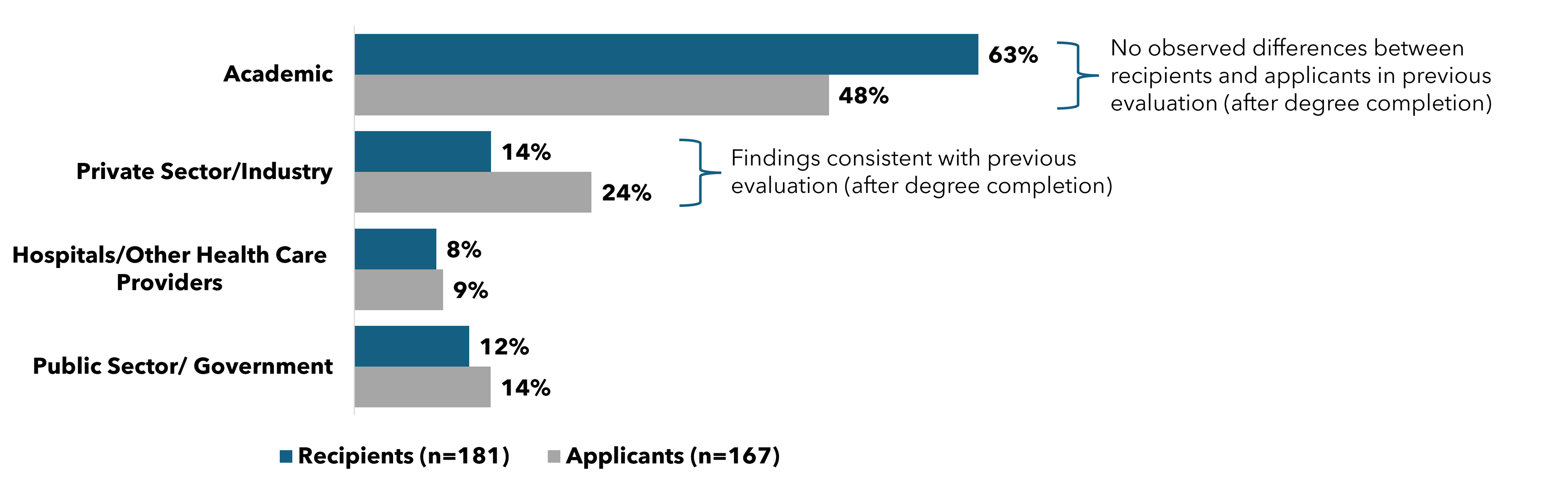
Academia is the main employment sector overall. Recipients are more likely to work in academia, while applicants are more likely to work in the private sector, suggesting Vanier funding provides a modest advantage for academic careers.
Long description
| Public Sector / Government | Hospitals / Other Health Care Providers | Private Sector / IndustryFootnote * | AcademicFootnote ** | |
|---|---|---|---|---|
| Applicants (n = 167) | 14% | 9% | 24% | 48% |
| Recipients (n = 181) | 12% | 8% | 14% | 63% |
- While academia dominates across agencies, the strength of this trend varies – it is most pronounced for NSERC (63% vs. 38%), moderate for SSHRC (68% vs. 55%), and minimal for CIHR (57% vs. 52%).
- Gender differences were observed for applicants. More women (50%) reported working in academia and the public sector (16%) than men (38% and 11%, respectively). While more men (43%) reported working in the private sector than women (19%).
Source: Tracker Survey Data
Note: Employment sectors with less than 5% (e.g., non-profit organization) are not shown; no observed differences between recipients and applicants.
Academic Sector
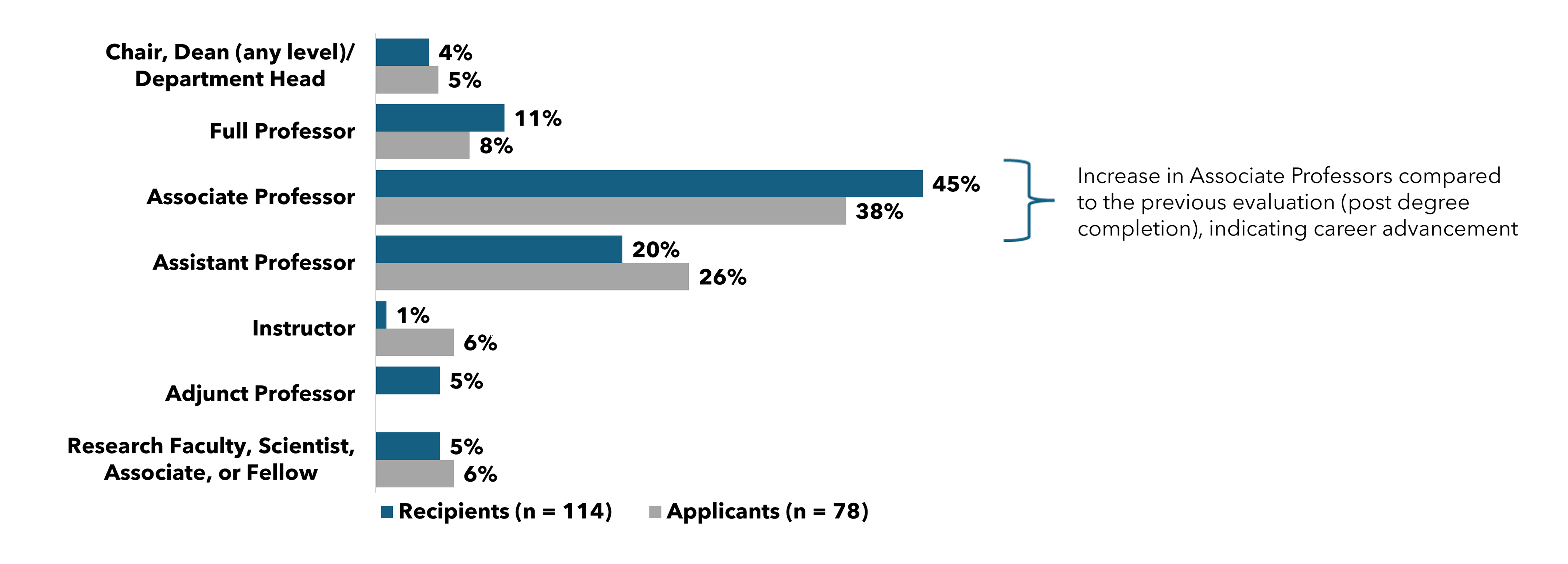
Both Vanier recipients and applicants in academia are progressing in their careers. The contribution of Vanier funding on academic career progression is modest, with recipients slightly more likely to hold an Associate Professor position compared to applicants.
Long description
| Research Faculty, Scientist, Associate, or Fellow | Adjunct Professor | Instructor | Assistant Professor | Associate ProfessorFootnote * | Full Professor | Chair, Dean (any level) / Department Head | |
|---|---|---|---|---|---|---|---|
| Applicants (78) | 6% | 6% | 26% | 38% | 8% | 5% | |
| Recipients (114) | 5% | 5% | 1% | 20% | 45% | 11% | 4% |
- Associate Professor was the most common role across agencies, with recipients slightly ahead - especially at NSERC (42% vs. 29%) and CIHR (52% vs. 42%), while the gap at SSHRC was minimal (43% vs. 42%)
- More women, who received the Vanier CGS (52%, n = 30) were in Associate Professor positions compared to applicants (42%, n = 13).
Source: Tracker Survey Data
Note: Positions with less than 5% (e.g., Staff Scientist, Research Assistant, Lab Technician) are not shown; no observable differences between recipients and applicants.
Non-Academic Sector
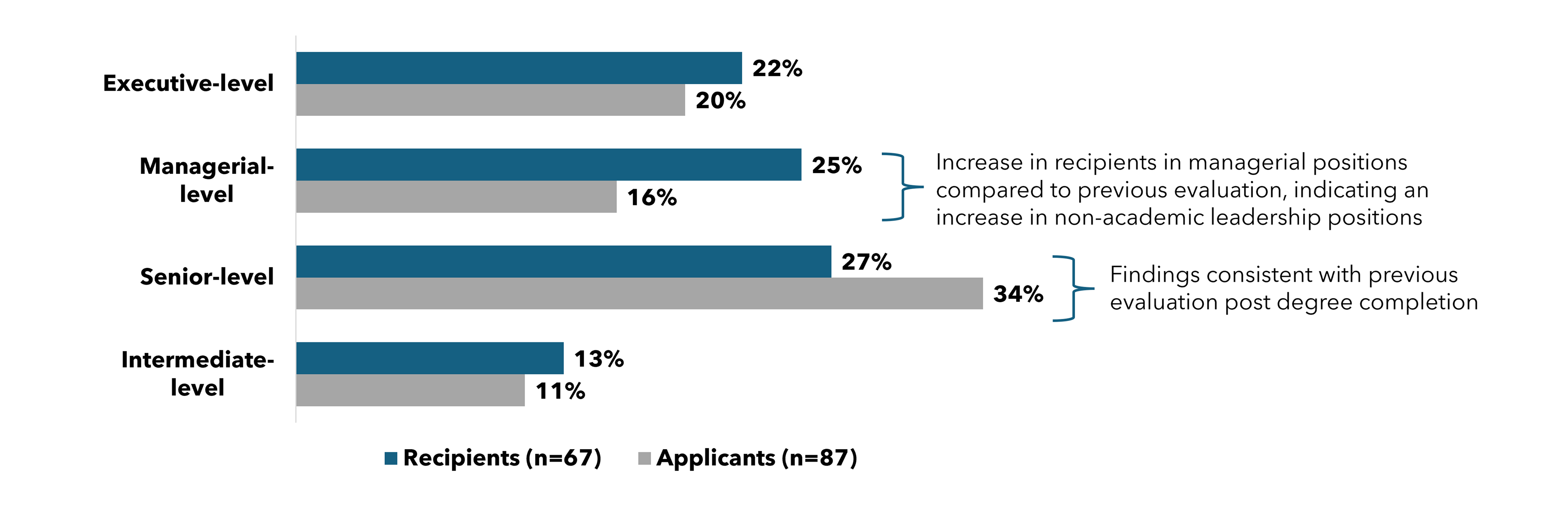
Both Vanier recipients and applicants in non-academic careers are advancing, often holding senior, managerial, or executive roles. This suggests that Vanier funding supports career progression in research careers beyond academia.
Long description
| Intermediate-level | Senior-levelFootnote * | Managerial-levelFootnote ** | Executive-level | |
|---|---|---|---|---|
| Applicants (n = 87) | 11% | 34% | 16% | 20% |
| Recipients (n = 67) | 13% | 27% | 25% | 22% |
- Some gender differences are observed but n's are small.
- Women report holding more managerial roles, men report holding more senior and executive roles.
- Among applicants, both genders show higher senior-level representation compared to recipients.
Source: Tracker Survey Data
Note: Junior-level position had less 5% and is not shown; no observable differences between recipients and applicants.
Research-related Leadership Positions
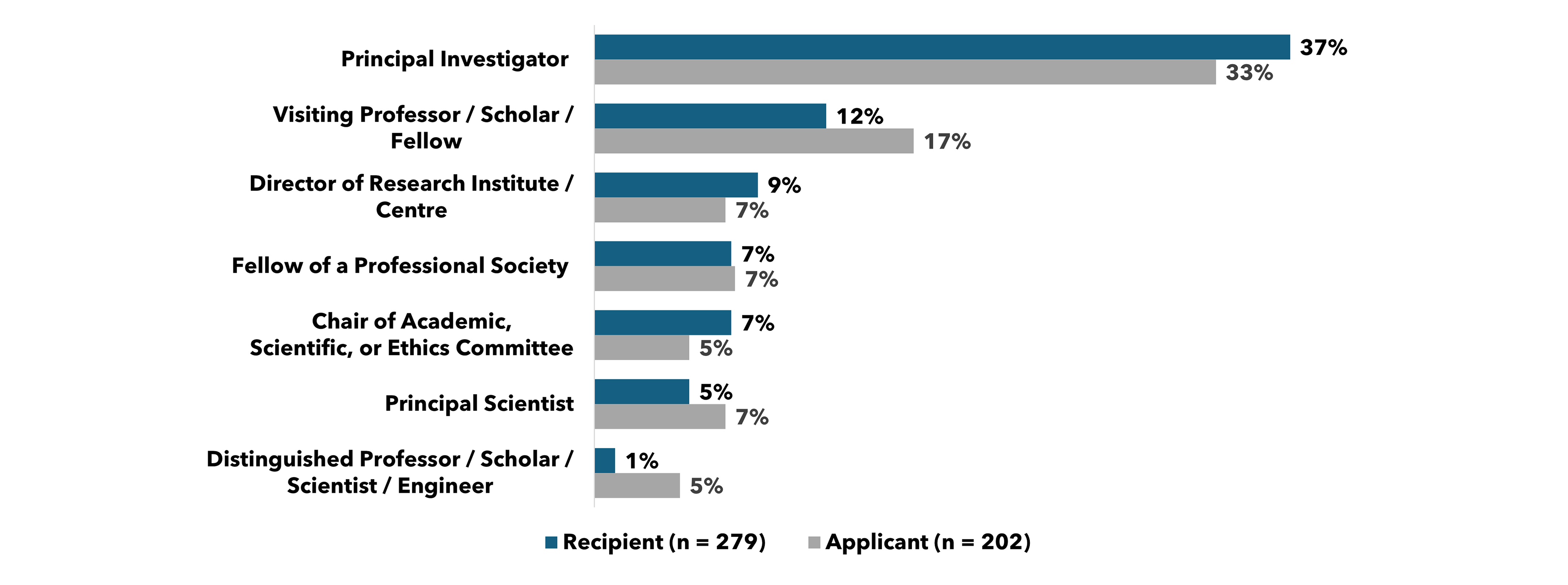
Some Vanier recipients and applicants currently hold academic leadership positions, with little difference between groups. While this suggests some progress towards the Vanier CGS's goal of developing early-career research leaders, the differential impact of the program is limited so far.
Long description
| Principal Investigator | Visiting Professor / Scholar / Fellow | Director of Research Institute / Centre | Fellow of a Professional Society | Chair of Academic, Scientific, or Ethics Committee | Principal Scientist | Distinguished Professor / Scholar / Scientist / Engineer | |
|---|---|---|---|---|---|---|---|
| Recipients (n = 279) | 37% | 12% | 9% | 7% | 7% | 5% | 1% |
| Applicants (n = 202) | 33% | 17% | 7% | 7% | 5% | 7% | 5% |
- Principal Investigator was the most commonly reported leadership role.
- Less than 5% of both recipients and applicants reported being in roles such as Canada Research Chair (Tier I,II), Endowed Chair, Dean, Medical Director, Chief Scientific Officer, Department Chair.
- More time is likely needed for this type of career advancement (just over 50% of both groups graduated between ~10 years ago).
Source: Tracker Survey Data
Note: Leadership roles that had less than 5% are not shown; no observable differences between recipients and applicants. Respondents could select multiple options. Percentages and n's are based on the total number of responses and may not sum to 100%.
Recognition Through Grants & Awards
Vanier CGS recipients are recognized for research excellence and show an advantage in securing additional research funding. On average, Vanier recipients hold approximately 2 more grants/awards and $3M more in funding than applicants.
- High grant and award acquisition rate overall
- Majority of recipients and applicants reported successfully receiving grants and/or awards since completing their doctoral studies (~80%). Although there is large variability in their value, both are receiving similar types.
- Recipients report a higher average number of grants & awards:
- Recipients: 4.66 (Median = 3; range = 1–25, n = 61)
- Applicants: 2.71 (Median = 2; range = 1–22, n = 59)
- Recipients report a higher average value of grants & awards:
- Recipients: $5.04M (Median = $350K; range = $3K–$110M; n = 60)
- Applicants: $2.06M (Median = $450K; range = $6K–$20M; n = 48)
- Some Variation by Agency and Gender
- Overall SSHRC respondents report higher values (mainly due to higher value grants), and NSERC respondents report higher numbers.
- Overall, women report receiving higher numbers, but men report receiving higher values.
Despite the Vanier recipients' advantage in securing research funding, the types and sources of grants and awards received are similar across both groups: Research Funders, Academic Institutions, Universities, Canadian Government Agencies, and Canadian/International Organizations.
- Both recipients and applicants report receiving postdocs, fellowships & awards
- Banting Postdoctoral Fellowship (PDF), CIHR Fellowship, NSERC PDF, SSHRC PDF, Fonds de Recherche du Québec Fellowship
- More recipients indicated they received international fellowships (e.g., Marie Curie Fellowship) and fellowships from Universities (e.g., York, UBC, University of Toronto)
- Universities and Health Research Institutes/Hospitals
- Queen's University Research Initiation Grant, University of Toronto, University of British Columbia, McMaster, Université Laval
- Health Sciences Center Foundation, Hospital Research Institute (Institut du Savoir Montfort), Ontario Molecular Pathology Research Network
- Canadian Federal & Provincial Government Agencies
- SSHRC Insight & Development Grants, CIHR's Project Grants, NSERC Discovery Grants, Women and Gender Equality Canada (WAGE), Fonds de Recherche du Québec, Government of the Noth West Territories
- Canadian Organizations, Businesses, Foundations, Not-for-Profits
- Alberta Innovates
- Mitacs (more applicants reported receiving grants than recipients)
- Québec Destination affaires/Cercle des ambassadeurs de Québec
- New Brunswick Innovation Foundation
- Canadian Women's Foundation
- Pathy Family Foundation
- International Organizations & Foundations
- Dutch Research Council
- European Research Council
- National Health and Medical Research Council (NHMRC)
- NASA
- National Science Foundation
- Médecins Sans Frontières
- Jürgen Manchot Foundation
- Alexander von Humboldt Foundation
Recognition Through Publications, Presentations & Media
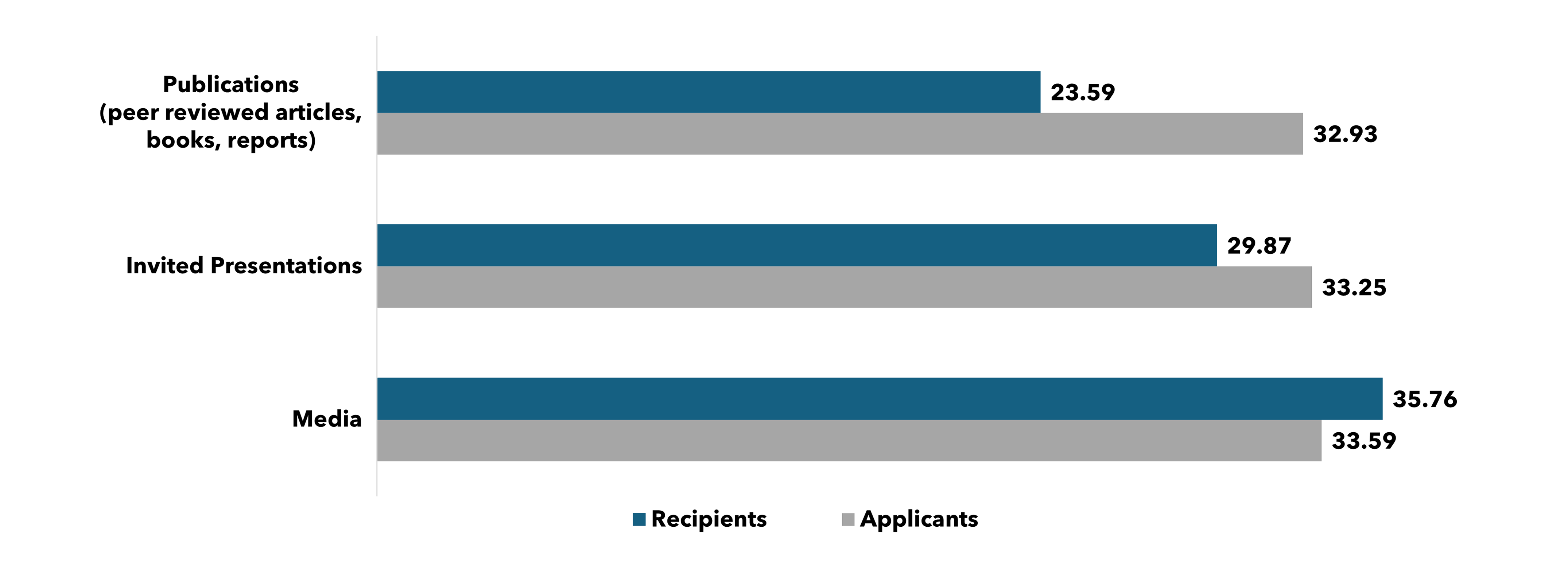
The Vanier recipients are being recognized for research excellence, but there is no clear advantage for recipients over applicants. Both groups advance knowledge and are recognized for scholarly and public engagement: applicants reported more total publications, recipients reported a slightly higher number of peer-reviewed journal articles.
Long description
| Applicants | Recipients | |
|---|---|---|
| Media | 33.59 | 35.76 |
| Invited Presentations | 33.25 | 29.87 |
| Publications (peer reviewed articles, books, reports) | 32.93 | 23.59 |
- There is wide variation in the number of outputs.
- Most common:
- Publications → peer-reviewed journal articles (slightly higher for recipients).
- Invited presentations → lectures & seminars
- Media → LinkedIn, Facebook, Blogs, YouTube & traditional media (newspapers & radio)
- NSERC respondents report higher average publication rates, SSHRC respondents report more presentations, and CIHR respondents report greater media recognition.
- Women excel in peer-reviewed output, presentations and media recognition, but men report higher overall publication totals.
Source: Tracker Survey Data
Recognition of Research Excellence
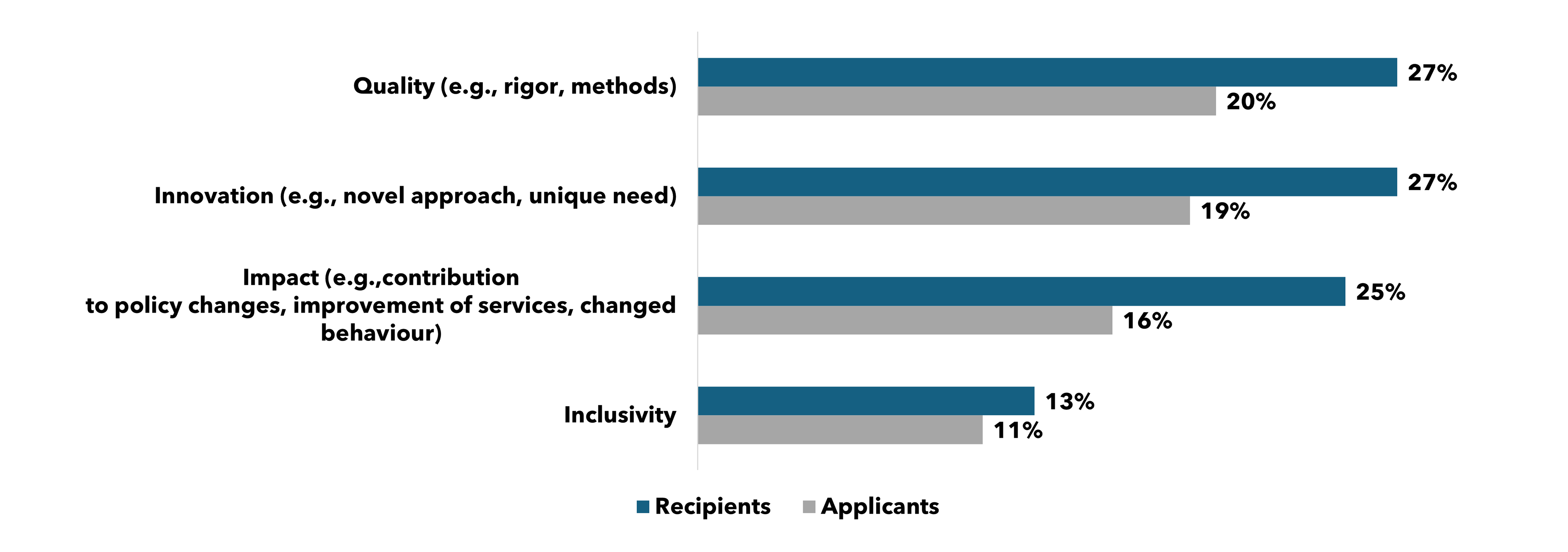
Research excellence is evident across both recipients and applicants, with recognition through awards, publications, and other contributions. Recipients report recognition slightly more often for quality, innovation, and impact than applicants, suggesting the program contributes to visibility.
Long description
| Applicants | Recipients | |
|---|---|---|
| Inclusivity | 11% | 13% |
| Impact (e.g., contribution to policy changes, improvement of services, changed behaviour) | 16% | 25% |
| Innovation (e.g., novel approach, unique need) | 19% | 27% |
| Quality (e.g., rigor, methods) | 20% | 27% |
"Electrochemical Society award for the quality of my research on nanocarbon materials."
"Received CFI grant for innovative research."
"Wastewater surveillance data extensively used by government and public health for decision making."
"Much of my work involved collaboration with Inuit communities in North Greenland. I work closely with Inuit NGOs and Inuit partners to conduct the work, and have published in Kalallisut (Greenlandic)."
Source: Tracker Survey Data
Note: Respondents could provide multiple options. Percentages and n's are based on the total number of responses and may not sum to 100%. Total responses across all categories was 167 for recipients and 111 for applicants.
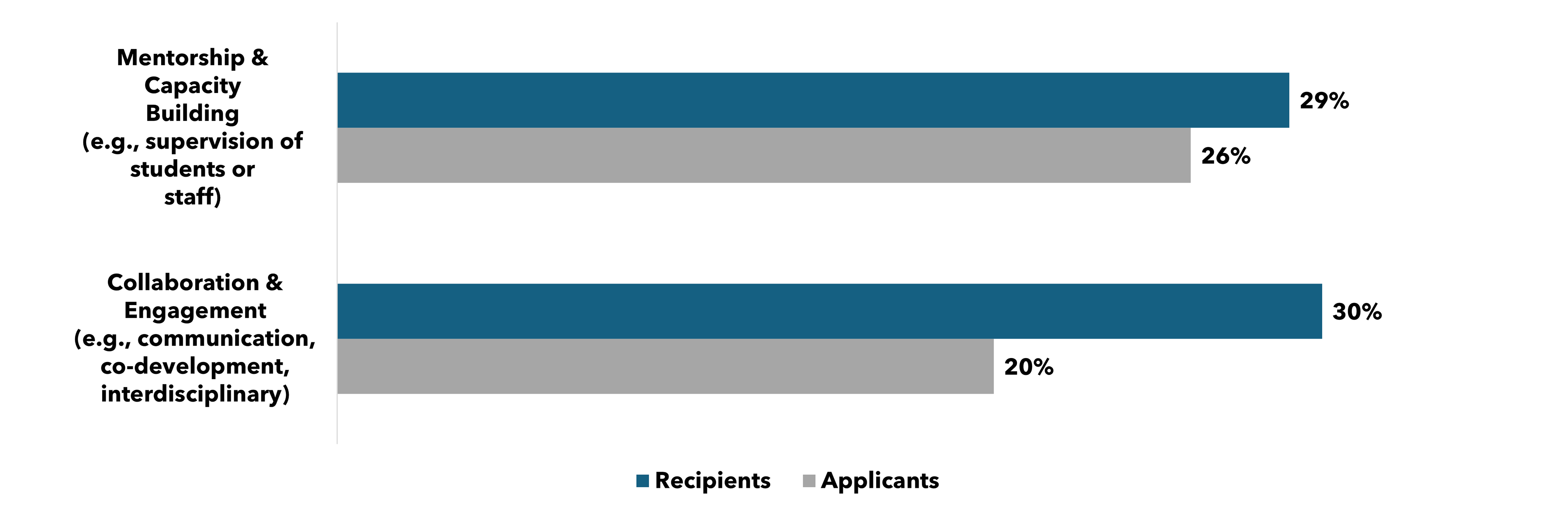
Both recipients and applicants contribute to strengthening Canada's research ecosystem through mentorship, building capacity, and fostering collaboration and engagement. Vanier recipients report participating in these activities slightly more often than applicants.
Long description
| Applicants | Recipients | |
|---|---|---|
| Collaboration & Engagement (e.g., communication, co-development, interdisciplinary) | 20% | 30% |
| Mentorship & Capacity Building (e.g., supervision of students or staff) | 26% | 29% |
"Both my undergraduate and graduate trainees have been recognized with institutional and external awards."
"I received the 2023 award for graduate mentorship from the faculty of arts and science."
"I was project facilitator for The Brightside Project that had researchers and artists working with members of a now vanished working-class and immigrant neighbourhood in Ontario."
"I received an award of recognition working with interdisciplinary teams."
Source: Tracker Survey Data
Note: Respondents could provide multiple options. Percentages and n's are based on the total number of responses and may not sum to 100%. Total responses across all categories was 107 for recipients and 80 for applicants.
Conclusions
The Vanier program has had a positive but modest impact on trainees' career outcomes, recognition, and research contributions as career trajectories were not markedly different than other funded doctoral students.
- Lessons Learned in Addressing Doctoral Support Needs
- The Vanier CGS Program effectively supported top doctoral talent, reduced financial barriers, enabling research careers in Canada and Internationally. However, career trajectories and leadership outcomes for recipients were largely comparable to other funded doctoral students, indicating a modest incremental advantage.
- The current and previous evaluations of the Vanier program identify key contributing factors that limited the differential impact of the scholarship on recipients versus applicants. These factors include: Program design constraints, Top tier applicant pool, Overlap with other scholarships, and Comparable training environments.
- These factors highlight the importance of systematic data collection and long-term tracking of outcomes and career trajectories to assess the value add of doctoral support programs.
- Career Outcomes and Use of Research Skills in Canada
- Recipients and applicants both pursued research-intensive careers, primarily in academia, with similar patterns of advancement. Vanier recipients were slightly more likely to hold academic roles and secure grants, but differences were not substantial.
- Recognition and Contributions to Research Excellence
- Recognition for research excellence is evident, with Vanier recipients securing more grants and awards on average, but overall patterns of recognition and scholarly output remain broadly similar to applicants, suggesting a modest incremental advantage.
- Implications and risks for the CRTAS-CGRS-D
- The Vanier CGS Program's positive but modest impact on research careers, leadership, and recognition underscores the need for continued doctoral support and highlights the need for a more flexible and equitable award design.
- While the CRTAS addresses some identified challenges (e.g., removing the leadership criterion, embedding EDI measures, enabling international mobility) it also retains some design risks such as institutional quota and review processes, which will require active monitoring.
Recommended Actions
Monitor Inclusivity and Access
- The CRTAS needs to monitor whether the changes made to improve inclusivity, access, and diversity reduce barriers (e.g., targeted support for Indigenous trainees and Black scholars, application process for non-quota institutions).
- The CRTAS has retained specific design elements that posed challenges for the Vanier CGS Program (e.g., the quota and institutional review model). These elements should be assessed to ensure they are not limiting access.
Enhance Performance Measurement and Career Tracking
- The CRTAS needs to establish performance baselines for the CGRS-D. The Vanier CGS Program evaluation data can inform these baselines.
- The CRTAS should ensure there is a mechanism in place to track trainees (including applicants) and link funding data across tri-agencies.
- The CRTAS Performance Measurement Strategy needs to include an end of award report along with 5-year follow ups as data sources to ensure availability of data for immediate, intermediate and longer-term outcomes.
Appendices
Vanier CGS Program Overview & Context
Overview
- The Vanier CGS program aims to attract and retain top-tier doctoral talent, both nationally and internationally, to develop their leadership potential and to position them for success as research leaders of tomorrow, positively contributing to Canada's economic, social and research-based growth through a research-intensive career.
- It is a tri-agency doctoral support program that was launched in 2008.
- The Vanier CGS program awards ~$25M annually with a total of up to 500 scholarships active at any time (over $370M has been invested since inception).
- In March 2025, the Treasury Board approved that all scholarship and fellowship programs will be consolidated into a harmonized talent program, the Canada Research Training Award Suite.
- The last Vanier CGS competition was launched in October 2024 with results expected in May 2025.
Key Features
- Valued at $50,000 per year for three (3) years.
- Available to both Canadian and international doctoral students studying at Canadian institutions.
- Considers three equally weighted selection criteria: academic excellence, research potential and leadership (potential and demonstrated ability).
- Up to 166 Vanier Scholarships are awarded each year, divided among the three federal granting agencies (CIHR, NSERC and SSHRC).
Vanier CGS Program Logic Model
Vision: To attract and retain top-tier doctoral talent, both nationally and internationally, to develop their leadership potential and to position them for success as research leaders of tomorrow, positively contributing to Canada's economic, social and research-based growth through a research-intensive career
| Activities | Outputs | Immediate Outcomes | Intermediate Outcomes | Ultimate Outcomes |
|---|---|---|---|---|
|
Program management and administration Development and dissemination of program branding, communications and marketing strategies Vanier-Banting Secretariat facilitates networking and collaborations |
Top-tier international applicants are attracted to Canada Vanier CGS awards are awarded to top-tier applicants Top-tier Canadian applicants are retained in Canada Communication/ promotion materials produced and disseminated |
Vanier CGS awardees receive advanced research training in the social sciences, humanities, natural sciences, engineering or health Vanier CGS awardees establish national and international collaborations Increased national and international awareness of Vanier scholarships as a competitive and recognized awards Vanier CGS Scholars demonstrate leadership (Research Leadership, Academic Leadership and Service Leadership) |
Vanier CGS alumni are retained in Canada Vanier CGS alumni undertake research careers in Canada Vanier CGS alumni pursue advanced training in the social sciences, humanities, natural sciences, engineering or health Vanier CGS alumni become leaders in early career research |
Vanier CGS program contributes to the supply of highly qualified/trained researchers for Canada's research enterprise Canada is a destination of choice for quality research training Vanier CGS alumni are recognized as exemplars of Canadian research excellence |
Source: CIHR Results and Impacts Unit. Vanier CGS Performance Measurement Strategy
CRTAS Canada Graduate Research Scholarship (Doctoral) Overview
Objective: recognize and support the next generation of outstanding trainees in research. By providing support for a high-quality research training experience to awardees, the CGRS D program strives to foster impacts within and beyond the research environment. Valued at $40,000 per year for three (3) years.
Selection Criteria: research potential (50%), relevant experience and achievements obtained within and beyond academia (50%)
Eligibility Criteria:
- Applicants may be a Canadian citizen, permanent resident of Canada, Protected Person, or foreign citizen, and either enrolled in an eligible doctoral program with a significant research component or have applied for, or are intending to apply for, an eligible program. Foreign citizens must be enrolled in a doctoral program of study at an eligible Canadian institution at the time of application. Up to 15% of all doctoral awards will be awarded to international applicants.
- The award may be held at both Canadian and international post-secondary institutions. Approximately 20% of all doctoral awards are eligible to be held abroad. International applicants may only hold the award in Canada.
- The doctoral program will maintain the practice of setting institutional quotas.
Expected Outcomes outlined in the Program Authorities:
- A diverse pool of excellent students and postdoctoral researchers are supported and recognized.
- Students and postdoctoral researchers can concentrate more fully on their research and training.
- Students and postdoctoral researchers transition to a career where they use their research skills and expertise.
- Canada's research capacity is strengthened through a pool of diverse and highly skilled people.
Methods
Document Review:
- ~11 key documents reviewed for context and to address relevance questions (e.g., previous evaluations, CRTAS launch documents, Budget 2024, Bouchard Report, and the Fundamental Science Review).
Vanier End of Award Report (VEAR) Data Analysis:
- Data from 750 Vanier CGS award recipients (who received a Vanier CGS award between April 2018 and November 2024) was analyzed to confirm if key employment and utility results were consistent with the previous evaluation (and they were).
- The sample consisted of 258 from CIHR (34.4%), 241 from NSERC (32.1%) and 251 from SSHRC (33.5%); 190 identified as women (59%) and 114 identified as men (35.4%).
Tracker Survey:
- First four cohorts were surveyed, building on previous evaluation (10+ years after award).
- A total of 354 out of 1140 completed the survey, for a response rate of 31.1% (171 applicants, 183 recipients).
- The sample included 129 from NSERC (36.4%), 115 from CIHR (32.5%), and 110 from SSHRC (31.1%); 151 identified as women (54.7%), 104 as men (37.7%), and four as gender-fluid, genderqueer, or nonbinary (1.4%).
Key Limitations:
- Scope limited to relevance and performance, excluded design, delivery, and immediate outcomes covered in previous evaluations.
- Response rates for survey questions varied, with some small sample sizes, potentially limiting generalizability and more advanced analyses. Findings reflect contribution, not attribution, as recipients' achievements cannot be solely attributed to the Vanier CGS, as they received additional funding throughout their careers.
Use of Microsoft Copilot:
- A secure generative AI tool (Microsoft Copilot) was used to support the synthesis of publicly available information in the document review and enhance clarity of expression in the final report (i.e., readability and use of plain language). All outputs generated through Copilot were reviewed and corrected when needed by the Evaluation Team to ensure accuracy, relevance, and consistency.
- Date modified: