The art of immunity: How interferons ward off viruses
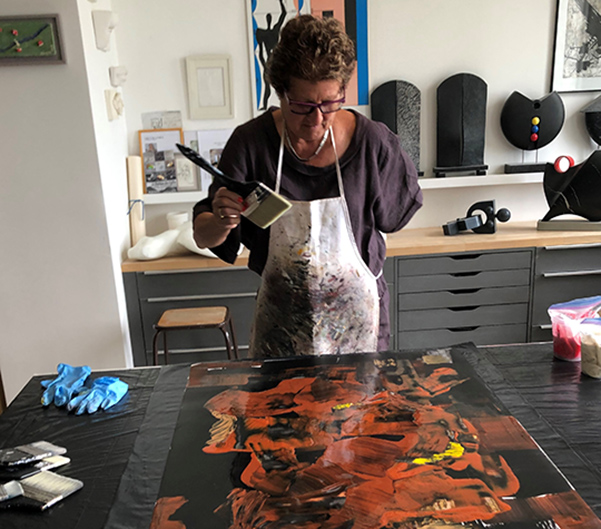
Dr. Eleanor Fish sees many parallels between science and art. As an immunologist at the University Health Network and University of Toronto and a painter of impressive non-objective art, Dr. Fish considers both disciplines as acts of bold creativity, risk-taking, and passion. This mindset helped her champion interferons—naturally occurring proteins with remarkable antiviral properties.
Dr. Fish’s journey began when she moved to Canada. At that time, the biotech company Genentech had just produced the first recombinant interferons and identified 14 different subtypes that were unknown until then.
Dr. Fish discovered that these proteins act as the body’s first responders to all viral threats: “Whether it’s a cold, or something more serious like a pandemic strain of flu, SARS, Ebola or SARS-CoV-2, interferons jump into action, blocking viruses from entering cells and activating the immune system.”
But interferons face a challenge. Viruses have co-evolved to fight back, producing factors that limit the all-important interferon response. Dr. Fish’s strategy has been to override this block by treating the host with interferon.
With support from the Canadian Institutes of Health Research, Dr. Fish devoted her career to search for ways to boost the immune system with recombinant interferons. Her research showed that interferons are very effective—some types more than others—in curbing and clearing viral infections during three health crises in the last two decades.
In 2003, when Toronto was hit by the SARS outbreak, Dr. Fish received emergency approval from Health Canada to treat patients with a novel synthetic interferon in a Toronto hospital. The treatment accelerated recovery, and the results led the World Health Organization to sanction an interferon treatment protocol.
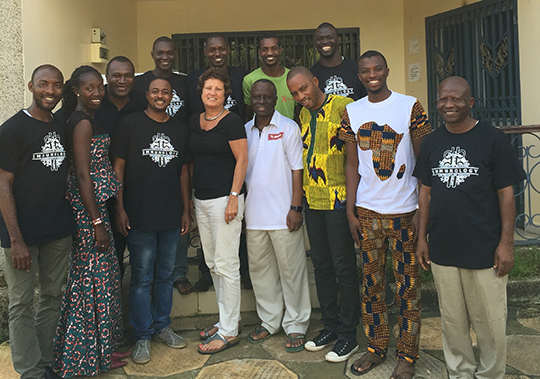
During the Ebola outbreak in West Africa in 2014, Dr. Fish worked with local health care professionals and officials in Guinea, undertaking a clinical study with interferon that improved survival rates for patients that would otherwise have faced a mortality rate of up to 90%. “We trained local health care workers in clinical protocols and safety procedures, enabling them to run a clinical treatment entirely themselves, thus leaving a legacy in West Africa,” she explains.
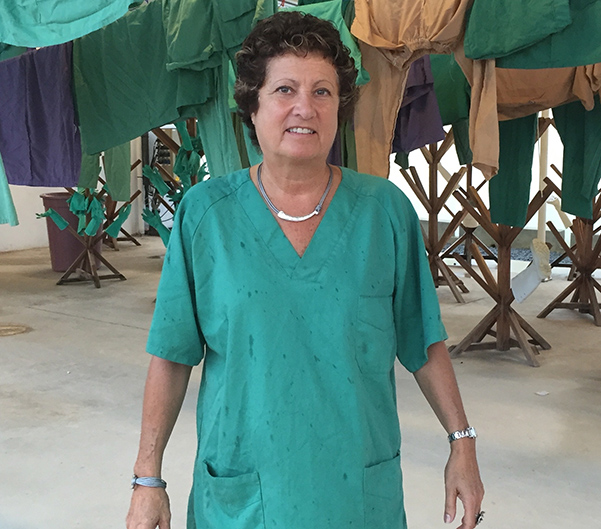
Dr. Fish’s interferon treatment also proved effective when the World Health Organization declared the COVID-19 outbreak a pandemic. Her exploratory study in Union Hospital in Wuhan, China, showed that inhaled interferon accelerated viral clearance when given at the onset of the infection. Dr. Fish then co-led a randomized controlled trial in Chile. Results showed that interferon treatment reduced transmission of the virus from an infected individual to uninfected, exposed household members.
Today, the artist-immunologist is looking for bold and creative ways to advance antiviral treatments for patients. This includes developing an interferon nasal spray that protects from a broad spectrum of viral respiratory infections. Dr. Fish has also started her own biotech company to produce the drug in Canada.
Moving the drug to commercialization requires a large investment, so Dr. Fish hopes investors will seize the opportunity to partner in this initiative that she believes will have global impact on preventing viral outbreaks and future pandemics:
“If there is another severe disease outbreak,” she says, “this antiviral spray would stop the virus in its tracks and protect the most vulnerable: the elderly, the young, the immunocompromised, and first responders.”
Dr. Fish was appointed as a Member of the Order of Canada in 2021 for her groundbreaking research on interferons and its impact on global health.
At a glance
Issue
Interferons are naturally occurring proteins that act as the body’s first responders to all viral threats, but viruses have co-evolved to fight back interferons and enter our cells.
Research
Dr. Fish has discovered ways to boost the immune system with recombinant interferons. Her interferon treatment proved very effective in curbing and clearing viral infections during the SARS outbreak, the Ebola outbreak, and the COVID-19 pandemic.
- Date modified: