IHSPR Institute Advisory Board Members – Biographies

Kimberlyn McGrail, MPH PhD (Chair)
Professor, Centre for Health Services and Policy Research, School of Population and Public Health
Scientific Director, Population Data BC
Scientific Director, Health Data Research Network Canada
Kimberlyn McGrail is a Professor in the UBC School of Population and Public Health and Centre for Health Services and Policy Research, and Scientific Director of Population Data BC and Health Data Research Network Canada. Her research interests are quantitative policy evaluation and all aspects of population data science. In 2019-2020 she participated as a member of the Canadian Institute for Advanced Research Task Force on AI4Health and from 2020-2022 she was a member of the Expert Working Group for the Pan-Canadian Health Data Strategy. She is currently a Canadian representative to with the Global Partnership for AI as part of the data governance working group, and sits on a number of other data-related advisory committees. She holds a PhD in Health Care and Epidemiology from the University of British Columbia, and a Master's in Public Health from the University of Michigan.

Brenda Andreas
Community member and Research collaborator
Province of Saskatchewan
Within her home province she has been an embedded patient partner for fourteen years. She has been instrumental in bringing the voice and visibility of the patient and family to her role on the Saskatchewan Health Authority Patient and Family Leadership Council, the Accreditation Oversight Committee, the Networks Oversight Committee, the SHA Board Quality and Safety Committee and well as the Ministry of Health Primary Care Renewal Committee. In addition, she is a member of the People Centered Measurement working group. Brenda's experience as a research collaborator in patient-oriented research in primary care started in 2014 in her role as a peer reviewer of grant applications. She is a member of three nationally funded learning collaboratives focusing on Youth Mental Health and Addictions with Health Standards Organization, IPC simulation curriculum in long term care with Health Standards Organization and with Health Care Excellence Canada Virtual Care Collaborative. Currently, she is the co-chair of the Canadian Primary Care Research Network (CPCRN) Patient Council and was a co-applicant on a CPCRN grant application. Brenda is also a patient surveyor with Accreditation Canada and is a member of the PaCE (Patient and Clinician Experience) committee of the North American Primary Care Research Group.
And finally, Brenda has co-delivered in knowledge sharing through podcasts, presentations, publications, poster abstracts, and through co-authorship of a book chapter – Bringing Leadership to Life in Health: Leads in a Caring Environment.

Melanie Barwick, PhD., C.Psych
Senior Scientist, Child Health Evaluative Sciences Program, SickKids' Research Institute and the SickKids Centre for Global Child Health
Professor, Department of Psychiatry, University of Toronto
Professor, Dalla Lana School of Public Health, University of Toronto
Melanie Barwick, PhD, C.Psych, is a Senior Scientist in the Child Health Evaluative Sciences Program of the SickKids' Research Institute and the SickKids Centre for Global Child Health. She also leads professional and resource development in Dissemination and Implementation Research and Practice within the Knowledge Translation Program of the SickKids' Learning Institute.
At the University of Toronto, she is a Professor in the Department of Psychiatry, Temerty Faculty of Medicine, and the Dalla Lana School of Public Health (Social and Behavioural Health Sciences, and the Institute for Health Policy, Management, and Evaluation).
Her community work includes Chairing the Governing Board for Children's Mental Health Ontario, membership on the Editorial Board for the SIRC journal Implementation Research and Practice, and as an Associate Editor for Frontiers in Health Services – Implementation Science.
An internationally recognized expert in dissemination and implementation research and practice, her health services research program spans many areas of health to improve the implementation of evidence into practice and broaden the reach of evidence to support decision-making, policy, knowledge, awareness, health, and well-being. She has considerable practical experience in implementation. Her current research, funded by CIHR, is developing a digital tool, The Implementation Playbook©, to facilitate the implementation of innovations in service settings. The paper prototype, The Implementation Roadmap©, is also available to support implementation planning.
She provides professional development in dissemination and implementation practice internationally through the Specialist Knowledge Translation Training™ (SKTT, for researchers and KT practitioners), the Knowledge Translation Professional Certificate™ (KTPC, for KT practitioners), and Planning for Implementation Practice™(PIP). The KTPC is recognized as a Leading Practice by Accreditation Canada and has over 500 graduates worldwide. Since 2004, SickKids has licensed SKTT training to the Research Impact Academy (AUS) and has over 3,600 learners internationally. She is the developer of tools to support dissemination and implementation.

Jamie Daw, PhD
Associate Professor, Department of Health Policy and Management, Columbia University
Jamie Daw is an Associate Professor in the Department of Health Policy and Management at the Columbia University Mailman School of Public Health. Dr. Daw uses quasi-experimental methods and large administrative datasets to evaluate the impact of health and social policies on health care access and health outcomes, with a focus on low-income families. As a principal investigator, Dr. Daw has been awarded over $11 million in competitive grant funding from the National Institutes of Health (NIH) and Agency for Healthcare Research and Quality (AHRQ). She was also a past recipient of the CIHR Frederick Banting and Charles Best Graduate Scholarship, CIHR Doctoral Research Award for Foreign Study, and CIHR-IHSPR Rising Star Award. Dr. Daw has published over 80 peer-reviewed manuscripts in leading journals including JAMA, CMAJ, Health Affairs, and AJPH, and has been cited in both Canadian and U.S. legislative testimony and policy reports. Dr. Daw currently sits on the editorial board of Health Services Research, serves as a co-lead for the Coverage, Access and Payment theme of AcademyHealth and is an active ad hoc reviewer for NIH. She holds a PhD in Health Policy from Harvard University, a MSc in Population and Public Health from the University of British Columbia, and a BHSc from McMaster University.

Antoine Groulx, MD, MSc, FCFP
Professor of Family medicine, Clinique Maizerets and Université Laval
Scientific Director, Quebec SPOR Support Unit
Antoine Groulx is a family physician and training manager with experience in unions, administrative positions and professional associations. He previously served as president of the Quebec College of Family Physicians and as the assistant deputy minister for Quebec's Ministère de la Santé et des Services sociaux, where his work focused on community service integration, data reflexivity, and user, decision maker and clinician empowerment.
A Full Professor of Clinical Medicine at Université Laval, he finds the time to balance his family life with clinical, teaching and research work and his job as clinical lead. He is the general director of Alliance santé Québec, a value-creating and sustainable health learning network. He actively contributes to the emerging learning health system structured around the Quebec Strategy for Patient Oriented Research (SPOR) Support Unit, and will become SPOR's scientific director in 2021.

Ruth Lavergne, PhD
Associate Professor, Department of Family Medicine, Dalhousie University
Ruth Lavergne is an Associate Professor in the Department of Family Medicine at Dalhousie University and a Tier II Canada Research Chair in Primary Care. Ruth’s program of research aims to address disparities in access to care and build evidence to make sure primary care organization, delivery, and workforce meet the needs of people in Canada now and in the future. She leads interdisciplinary mixed methods studies in collaboration with experts in qualitative methods, patients, clinicians and policymakers. Her expertise is in quantitative analysis of health system data and use of observational designs to examine the impact of policy changes. Current work examines factors shaping changing primary care supply and population needs as well as how policy choices shape equity in access to primary care.
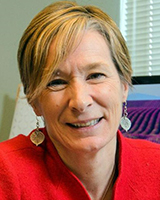
Josée G. Lavoie, MA, PhD
Professor, Department of Community Health Sciences, University of Manitoba
Director, Ongomiizwin Research, Indigenous Institute of Health and Healing
Josée G. Lavoie is a Professor in the Department of Community Health Sciences, and holds an adjunct appointment in the Department of Indigenous Studies, University of Manitoba. She is of French-Quebec ancestry. She has mixed method expertise in public administration, qualitative and health service research (health administrative data). Her research focuses on improved access to primary (ie outpatient) healthcare for underserved and marginalized populations, in rural, remote and inner-city environments; and on shifting health policy. Dr. Lavoie’s program of research is uniquely positioned, innovative and conducted in partnership with First Nations, Inuit and other Indigenous groups across Canada, Australia, New Zealand and circumpolar countries. She is a Fulbright Scholar (Fulbright Arctic Initiative, 2018-19), one of the founding members of the CIHR College of Reviewers (2016-20), and previously served on the Institute of Indigenous Peoples’ Health (2013-16). Her program of research demonstrates leadership in engaged scholarship.

Elena Lopatina, MD, PhD
Senior Scientist, Alberta Virtual Pain Program, Primary Care Alberta
Adjunct Assistant Professor, Department of Community Health Sciences, Cumming School of Medicine, University of Calgary
Dr. Elena Lopatina is a Senior Scientist with the Alberta Virtual Pain Program at Primary Care Alberta and an Adjunct Assistant Professor in the Department of Community Health Sciences at the Cumming School of Medicine, University of Calgary. Drawing on her interdisciplinary training, Dr. Lopatina developed her skills and program of research through the CIHR Health System Impact Program with a 2018 Doctoral Fellowship, a 2021 Postdoctoral Fellowship, and a 2024 Embedded Early Career Researcher Award and is now recognized as one of Canada's leading embedded scientists.
Within Alberta's health system, Dr. Lopatina leads an embedded research program focused on the design, implementation, and evaluation of Canada's first province-wide, publicly funded virtual chronic pain program and on building a provincial learning health system for chronic pain management. She works closely with health system organizations, clinicians, patient partners, and communities to co-design and implement services that advance the Quintuple Aim—improving population health, patient outcomes and experience, provider experience, health system efficiency, and equity—with a particular emphasis on virtual care, digital health, innovative models of care, and equitable access for populations facing disproportionate barriers to care.
In addition to Dr. Lopatina's embedded research leadership within Alberta, she is the Nominated Principal Investigator of the inaugural CIHR-funded Health System Impact Training Platform (HSITP), a national initiative strengthening embedded research and learning health system capacity across Canada. Through vision and leadership of Dr. Lopatina and the pan-Canadian HSITP team, the HSITP is developing future embedded research leaders and building learning health system capabilities nationwide, engaging more than 330 Health System Impact Fellows, Early Career Researchers, and alumni, together with their academic and health system mentors, over 140 health system organizations, and more than 25 academic institutions.

Kannin Osei-Tutu, MD, MSc, CCFP
Senior Associate Dean, Health Equity and Systems Transformation
Cumming School of Medicine, University of Calgary
Dr. Osei-Tutu is the inaugural senior associate dean - Health Equity and Systems Transformation at the Cumming School of Medicine having previously served as associate director student advising and wellness in UME, and as director of resident support at PGME. He is well established as a provincial and national leader in change transformation. Dr. Osei-Tutu is the founder and inaugural past president of the Black Physicians' Association of Alberta, a member of the College of Physicians and Surgeons of Alberta's Anti-racism Anti-discrimination Action Committee, and chair of the inaugural AFMC Black Health, Innovation and Advancement Committee. He informs the development of policies, educational programs and curricula that are inclusive and has established partnerships with regulatory and licensing bodies to advance health equity.
Dr. Osei-Tutu earned a degree in Kinesiology from McMaster University, followed by a Master of Science and medical degree at Dalhousie University. He completed a Family Medicine residency at the University of Toronto. He is the recipient of many awards including the 2024 Dr. Howard D. McCurdy Award for Outstanding Service to Canadian Black Scientists, Canadian Black Scientists Network, the 2023 National Leadership Award from the Black Physicians of Canada, the 2022 Donald I. Rice Award from the Foundation for Advancing Family Medicine, and the 2022 John Ware Fellowship from the DeGroote School of Business, McMaster University.

Tara Sampalli
Senior Director, Implementation Science and Evaluation, Global Health Systems Planning, Nova Scotia Health
Dr. Tara Sampalli is the Senior Director of Implementation Science and Evaluation, and Global Health Systems Planning at Nova Scotia Health. Dr. Sampalli has a BEng from Bangalore University, India, a Master of Applied Science in Biological Engineering and a PhD in Interdisciplinary Studies specializing in Health Informatics from Dalhousie University. She has also successfully completed the Scottish Improvement Leadership Program.
Tara has held multiple important roles in the health authority and has made significant contributions in each of these roles. In her current role at Nova Scotia Health, she leads the Implementation Science Team, and the Network of Scholars and is working with many key partners in the province to support the Learning Health System strategy. Tara also holds an Assistant Professor position at the Faculty of Medicine at Dalhousie University.
Through her many roles in the organization, Tara has combined her diverse educational background very effectively and has been instrumental in supporting multiple priority initiatives that have gone on to win provincial, national, and international quality awards. She has also secured numerous research grants and published several key articles related to health system improvements and transformations. She has a deep passion for working with patients and community partners.

Nathan M. Stall, MD, PhD, FRCPC
Division of General Internal Medicine and Geriatrics
Clinician Scientist and Geriatrics Lead, Sinai Health
Assistant Professor, Department of Medicine, University of Toronto
Dr. Nathan M. Stall is geriatrician and the geriatrics lead at Sinai Health as well as a Clinician Scientist and Assistant Professor in the Department of Medicine at the University of Toronto. He is also appointed as a scientist at Women’s Age Lab and Women’s College Research Institute at Women’s College Hospital.
Dr. Stall received his medical degree from Western University and completed his residency in Internal Medicine and fellowship training in Geriatric Medicine at the University of Toronto. He completed a PhD in Clinical Epidemiology & Health Care Research at the Institute of Health Policy, Management and Evaluation (IHPME) at the University of Toronto. His doctoral research was supported by the University of Toronto Department of Medicine’s Eliot Phillipson Clinician-Scientist Training Program and the Vanier Canada Graduate Scholarship.
Dr. Stall's research interests include using large administrative databases to study Ontario’s long-term care system, the population health impact of unpaid caregiving for dementia, drug safety for older adults, sex- and gender-based determinants of ageing, health care utilization and end-of-life care among persons with dementia, and climate change and ageing. During the COVID-19 pandemic, he served as the Assistant Scientific Director of Ontario's COVID-19 Science Advisory Table and a Network Science Advisor for CanCOVID. He also served as Associate Editor for the Canadian Medical Association Journal from 2019-2024, and is currently an Editorial Fellow at JAMA Internal Medicine.
Dr. Stall has published 125 manuscripts in peer-reviewed publications such as the New England Journal of Medicine, the Journal of the American Medical Association (JAMA), JAMA Internal Medicine, the British Medical Journal, Annals of Internal Medicine, and the Canadian Medical Association Journal. He has presented his work at national and international scientific meetings, and has been awarded over $5 million in competitive grant funding from the Canadian Institutes of Health Research, Innovation, Science and Economic Development Canada, the Public Health Agency of Canada and the University of Toronto.

Erin Strumpf, PhD
Associate Professor, McGill University
Erin Strumpf, PhD, is an Associate Professor and William Dawson Scholar at McGill University. She is a member of the Department of Economics and the Department of Epidemiology, Biostatistics and Occupational Health, and a founding member of McGill’s Public Policy and Population Health Observatory (3PO). Prof. Strumpf's research focuses on evaluating the impacts of health and social policies on the health of individuals and populations, as well as on the performance of the health care system. She uses methods for causal inference, principally quasi-experimental designs, to estimate the effects of interventions and reforms in real-world settings and actively collaborates with decision makers to generate relevant, usable knowledge to improve population health and health care system performance. Prof. Strumpf was a Researcher in Residence at Quebec's Institut national d'excellence en santé et en services sociaux (INESSS) (2019-2020) and a board member of the International Health Economics Association (2020-2022). Prof. Strumpf holds a PhD in Health Policy (Economics) from Harvard University and a BA from Smith College.

Jocelyne (Jo) Voisin
Senior Assistant Deputy Minister
Health Canada
Jo Voisin is Assistant Deputy Minister at Health Canada's Health Policy Branch, which is responsible for pan-Canadian health system policy, as well as the department’s strategic policy functions. In her many years working at Health Canada, Jo was instrumental in shaping policy directions in health care through bilateral agreements with provinces and territories, advancing work to improve how health data is used and shared to benefit Canadians and supporting Canada’s health workforce. She also played a key role in supporting Canada’s response to the COVID pandemic. Jo has occupied several executive leadership positions at Health Canada and in other federal departments, including in youth employment policy, health product regulation and public health. Jo also worked in social policy at the Privy Council Office, and in economic policy at Treasury Board Secretariat and Innovation, Science and Economic Development Canada. Jo is an avid weekend and vacation cyclist, as well as an artist.
- Date modified: