IIPH Institute Advisory Board Members – Biographies
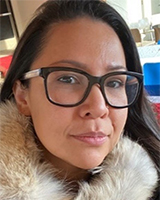
Karen Blondin Hall
Director, Cultural Safety and Anti-Racism, Department of Health and Social Services, Government of the Northwest Territories
Karen Blondin Hall is Sahtúgot’ı̨nę (person from Great Bear Lake) and grew up in Yellowknife, Northwest Territories (NWT). She currently works in Yellowknife as Director, Cultural Safety and Anti-Racism for the Government of the Northwest Territories, Department of Health and Social Services where she provides leadership to the organization’s system-wide approach to addressing anti-Indigenous racism. For almost a decade, Karen has worked with Indigenous peoples and communities across the NWT to set the strategic vision and actions to embed cultural safety and anti-racism across the NWT health and social services (HSS) system. This includes the development and delivery of mandatory in-person cultural safety and anti-racism training for NWT HSS staff.
She holds a BSc in Health Promotion from Dalhousie University and an MA in Studies in Policy and Practice from the University of Victoria where she focused her studies and research on Indigenous health inequities, Indigenous ways of knowing, and cultural safety.
Karen comes from a line of Indigenous Knowledge Holders and is passionate about incorporating Indigenous teachings and practices into her life both personally and professionally.
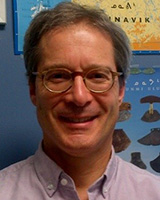
Paul Brassard
Associate Professor of Medicine, McGill University
Principal Investigator, Center for Clinical Epidemiology, Jewish General Hospital
Assistant Professor, Faculty of Medicine, School of Public Health, Department of Community and Preventive Medicine, Université de Montréal
Dr. Brassard is a clinician-scientist and teacher with postgraduate training in parasitology and epidemiology and a Fellow of the Royal College of Physician of Canada in public health and preventive medicine with special interest in communicable disease control and prevention and circumpolar health. He is an Associate Professor of Medicine at McGill University and a principal investigator in the Center for Clinical Epidemiology of the Jewish General Hospital in Montreal and an Assistant Professor at Université de Montréal, Faculty of Medicine, School of Public Health, Department of Community and Preventive Medicine.
He previously served on the Board of Directors of the Canadian Society for Circumpolar Health, as the Secretary-Treasurer of the International Network for Circumpolar Health Research and on the Board of Directors of the International Association of Circumpolar Health Publishers.
He has extensive experience in management of field research and participatory-based interventions involving the Canadian Indigenous population and currently developing a screening, prevention and promotion agenda focusing on the modern cancers touching the Inuit population of Canada.

Heather Castleden, PhD
Professor, University of Victoria
Dr. Heather Castleden is a Professor and the President's Impact Chair in Transformative Governance for Planetary Health at the University of Victoria. She is a white settler scholar, trained as a health geographer, and she has been doing community-based participatory research in solidarity with Indigenous Peoples for over two decades. She is a former NEIHR-funded trainee and was a NEIHR Principal Investigator as well as IAB member for IIPH from 2012-2014. Dr Castleden is a former Canada Research Chair, Fulbright Scholar, and is now an elected member of the Royal Society of Canada's College of New Scholars, Artists, and Scientists. She is the Co-Director for the Archipelagos of Indigenous-led Resurgence for Planetary Health Collective, Director of the HEC Lab, Co-Host of the Indigenous Planetary Health Podcast, and the Strategic Co-Director for the North American Hub of the Planetary Health Alliance. Her major research interest areas are transformative governance, planetary health, climate displacement, decolonizing methodologies and institutions, and community-led participatory research.
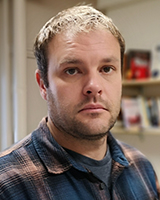
Robert (Bobby) Henry
Associate Professor, Indigenous Studies, University of Saskatchewan
Canada Research Chair Tier II, Indigenous Justice and Wellbeing
Dr. Robert Henry (Métis) is an Associate Professor in Indigenous Studies at the University of Saskatchewan. His research incorporates photo-voice methods and Indigenous methodologies, examining Indigenous health and wellbeing. He is leading a project that aims to improve public understanding about street gangs and street lifestyles through community engagement research, with a goal of informing policies that can help combat high rates of incarceration among Indigenous Peoples in the Prairie provinces. He is the Executive Director and Principal Investigator, nātawihowin and mamawiikikayaahk Research Networks (SK-NEIHR) and the Co-Principal Investigator, NEIHR National Coordinating Centre.

Sameera Hussain
Senior Advisor, Public Health Agency of Canada
Adjunct Professor, School of Epidemiology and Public Health, University of Ottawa
Dr. Sameera Hussain is a health policy professional and thought leader whose work focuses on equity, health systems strengthening, and the social and structural determinants of health. Trained as a global health scholar, she brings extensive experience in strategic policy leadership, including contributions to Canada’s COVID-19 response and national immunization efforts, and knowledge translation aimed at building and sustaining bridges between researchers and policy-makers to create equity-focused, inclusive policy and optimize health equity.
Dr. Hussain’s commitment to Indigenous health is rooted in her community-engaged international research experience and her ongoing contributions to advancing equitable, decolonizing approaches within federal public health policy. She is dedicated to capacity strengthening and mentorship, particularly for early-career women and racialized professionals.
She holds a doctorate in public health and degrees in political and development studies. Dr. Hussain lives and works in Ottawa, the traditional, unceded territory of the Algonquin Anishinaabek people.
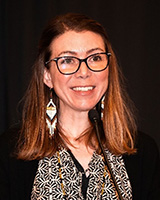
Michelle Leach, PhD
Scientific Director, Yukon Strategy for Patient-Oriented Research
Dr. Michelle Leach (she/her) is the Scientific Director and NPI of the Yukon Strategy for Patient-Oriented Research (YSPOR) Unit, where she leads health research grounded in equity, community partnership, and the integration of Indigenous knowledge. Her work focuses on strengthening health systems across the North through approaches that are inclusive and driven by the priorities of Yukon communities.
Since relocating to the Yukon in 2016, Dr. Leach has worked alongside Yukon First Nations governments, community researchers, youth, government and non-government organizations to co-design research that reflects local needs. She is humbled to be guided by the mentorship and wisdom of Yukon Elders, whose teachings shape her commitments to reciprocity, respect, and relationship throughout all stages of research. Her projects address mental wellness (she is the NPI for the Integrated Youth Services initiative in the Yukon), access to culturally safe care, and the revitalization of Traditional Indigenous Medicines in partnership with First Nations.
Dr. Leach leads the annual YSPOR Health Summit, a gathering that uplifts Indigenous ways of knowing through Elder-led reflections, cultural activities, youth panels, and community dialogue. The Summit fosters Ethical space and ensures that Yukon-specific evidence informs policy and decision-making.
Through YSPOR’s funding programs and the Junior Researcher initiative, she supports capacity building among Indigenous youth and people with lived experience, championing pathways for them to lead meaningful research in their own communities. Some of her most valued work is in shared learning with Yukon First Nation youth.

Candice Lys, PhD, M.S.M.
Founder & Executive Director – FOXY/SMASH
Research Associate, Aurora College
Dr. Candice Lys grew up in a very large Métis family in Fort Smith, NWT and now resides in Yellowknife. She holds a PhD in Public Health Science from the University of Toronto, a MA in Health Promotion from Dalhousie University, and a BA Honors (with First Class Honors) in sociology from the University of Alberta. She has nearly 20 years of experience as a community-based sexual and mental health promotion expert and researcher.
Candice is the Co-Founder/Executive Director of FOXY (Fostering Open eXpression among Youth) and SMASH (Strength, Masculinities, and Sexual Health). FOXY and SMASH are peer-led, trauma-informed, arts-based sexual and mental health programs that use the arts to facilitate discussion, education, and healing among Northern and Indigenous youth, reaching over 6000 youth to date. In 2014, FOXY was the first organization to be awarded the entire $1 million Arctic Inspiration Prize. Candice is recognized as the only Ashoka Fellow from the NWT and has earned the Meritorious Service Medal (Civil Division) from the Governor General of Canada, a 2020 Indspire Award for Education, and a CIHR Vanier Canada Graduate Scholarship, among numerous other awards.
She is a Mama to a little human Luca and a rambunctious beagle named Maple.
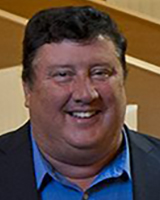
Rod McCormick
Senior Professor, Indigenous Health, Thompson Rivers University
Dr. Rod McCormick (Kanienkehaka-Mohawk) is a Senior Professor and BC Government endowed Research Chair in Indigenous Health at Thompson Rivers University. Before moving to his partner’s home community of T’Kemlups te Secwepemc, Rod was a psychologist and counselling psychology professor at the University of British Columbia for 18 years. Dr. McCormick’s research focuses on community capacity building in mental health and research as well as the reclamation of traditional forms of healing. Dr. McCormick has been a clinician and consultant in Indigenous mental health for approximately 35 yrs. Dr McCormick is also a veteran having served as a naval officer for 6 years.
Professor McCormick was the lead for the CIHR funded BC Aboriginal Capacity and Developmental Research Environments, the BC and Western Arctic Network Environments for Aboriginal Health Research, and the Kloshe Tillicum network. He is currently the lead on the National/International Indigenous mentorship network Ombaashi, the indigenous undergraduate research training program: Knowledge Makers, as well as the All My Relations Indigenous Health Research Centre at TRU. He is an investigator with national initiatives such as Investigator Patient Oriented Research (SPOR) National Training Entity (NTE), the Ontario Network Environments for Indigenous Health Research, and the BC Network Environments for Indigenous Health Research.
In addition to previously serving on CIHR Institutional advisory and peer review boards, he currently serves on national and international advisories such as the Child Bright Network; as a core member of the national Expert Advisory Committee to provide advice and guidance for the reform of Indigenous Services Canada, as well as the international peer review committee for the Australian National Healthand Medical Research Council (NHMRC).

Cassandra J. Opikokew Wajuntah, PhD
Associate Professor, Department of Community Health and Epidemiology
University of Saskatchewan
Dr. Cassandra J. Opikokew Wajuntah is a member of Canoe Lake Cree Nation and was raised in Meadow Lake, Saskatchewan. She holds a BA in Journalism (2009), a Certificate in Indigenous Communication Arts (2009), a Master of Public Administration (2012), and a PhD in Public Policy (2022). She was the Director of the Indigenous Peoples' Health Research Centre at the First Nations University of Canada, which contributed over $20 million to Indigenous health research in Saskatchewan. She is an Associate Professor of Community Health and Epidemiology at the University of Saskatchewan. She is also an elected member of the U of S University Council, an appointed member of the Public Health Agency of Canada’s Ethics Consultative Group, and the former Co-Chair of the U of Regina's Research Ethics Board. She currently resides in Fort Qu’Appelle, SK with her husband, Justin, who is member of Standing Buffalo Dakota Nation, and their 5 children.

Dr. Romina Pace
Assistant Professor of Medicine, McGill University
Principal Investigator, Centre for Outcomes Research and Evaluation, Research Institute of the McGill University Health Centre
Dr. Romina Pace is a clinician-scientist and General Internist at the McGill University Health Centre (MUHC), with a dedicated clinical practice serving Indigenous communities through the Cree Board of Health and Social Services of James Bay (CBHSSJB) since 2015 and at Kateri Memorial Hospital in Kahnawake since 2022. She is an Assistant Professor in the Department of Medicine at McGill University and Associate Director of the Indigenous Health Professions Program at McGill.
Dr. Pace's research and clinical practice focus on addressing chronic disease and advancing culturally relevant, sustainable healthcare for Indigenous populations. She holds a Master’s in Epidemiology, completed a research fellowship specializing in Indigenous health and mixed-methods evaluation, and maintains strong collaborative partnerships with Indigenous communities to improve health outcomes and promote cultural safety within healthcare systems.
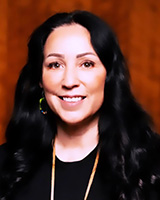
Michelle Peters, Phd (c), MSW/RSW, BBA
Clinical Specialist and Consultant
Etli Npisimkek Counselling and Consulting Services
Part-time Instructor, Dalhousie University
Michelle Peters is a PhD candidate in Education at St. Francis Xavier University whose research focuses on exploring the importance of reclaiming Mi'kmaq ways of knowing and being in clinical social work practice with Indigenous people in Mi'kma'ki. She currently teaches in the School of Social Work at Dalhousie University and previously taught courses for St. Thomas University and St. Francis Xavier University. Her teaching emphasizes culturally grounded, trauma-informed, and community-centered approaches that embrace the principles of Etuaptmumk (Two-Eyed Seeing of Indigenous and Western perspectives) in education and practice.
Michelle is a Registered Social Worker and Clinical Specialist; her private practice is known as Etli Npisimkek Counselling and Consulting Services. She offers holistic and culturally responsive counselling to individuals, couples and families. She also provides crisis supports to Mi'kmaq communities and throughout Mi'kma'ki. Through her consulting and educational work, she partners with Indigenous communities, government agencies and community partners to advance reconciliation, decolonization, and wellness-based approaches to service delivery and policy development.
A former Co-Chair of the Decolonizing Committee with the Nova Scotia College of Social Workers, Michelle's leadership and advocacy have been recognized through numerous distinctions, including the SSHRC Doctoral Fellowship, the Nora Bernard Award for Advocacy from the Nova Scotia Native Women's Association, the Honouring Our People Nova Scotia Provincial Award from the Atlantic Policy Congress of First Nations Chiefs Secretariat, and the Diane Kays Award from the Nova Scotia College of Social Workers.

Tara Pride, PhD
Assistant Professor, Dalhousie University
Dr. Tara Pride is of mixed Mi’kmaw and settler ancestry and member of Sipekne’katik First Nation in Mi’kma’ki. She is a registered occupational therapist, Assistant Professor in the School of Occupational Therapy at Dalhousie University, and Nominated Principal Investigator of the Wabanaki-Labrador Indigenous Health Research Network. Her research program encompasses three main areas including advancing Indigenous excellence in occupational therapy, Indigenous mentorship, and Indigenous community led- and driven- health research. She is currently working alongside Indigenous occupational therapists through the newly created Indigenous Occupational Therapy Collective of Canada not for profit. This Collective aims to create a space led by, and for, Indigenous occupational therapy students and clinicians. It also seeks to dismantle white supremacy and colonialism in occupational therapy practice, education, and research.
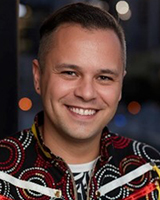
Jaris Swidrovich, PharmD, PhD
Assistant Professor, University of Toronto
Dr. Jaris Swidrovich (he/they) is an Assistant Professor and Indigenous Engagement Lead in the Leslie Dan Faculty of Pharmacy at the University of Toronto. He is a queer, Two Spirit, Saulteaux and Ukrainian pharmacist from Yellow Quill First Nation (Treaty 4 territory, Saskatchewan). His mother was a 60s Scoop survivor and his grandmother and great-grandmother both survived Indian Residential Schools.
He holds a Bachelor of Science in Pharmacy, a post-baccalaureate Doctor of Pharmacy, and a PhD in education. His primary areas of research and practice include pain, HIV/AIDS, substance use disorders, 2SLGBTQ+ health, and Indigenous health. As a Two Spirit, First Nations, and disabled person himself, Dr. Swidrovich brings a strong lens of equity, diversity, inclusion, intersectionality, and social justice to his research program.
Dr. Swidrovich is the Co-Scientific Director of the CIHR-funded Saskatchewan Network Environment for Indigenous Health Research (SK-NEIHR) called nātawihowin (“art of self-healing” in Cree), which is a First Nations Research Network that supports researchers, students, and First Nations health leaders and communities in Saskatchewan and beyond. Dr. Swidrovich is the founder and chair of the Indigenous Pharmacy Professionals of Canada, and also sits on several other local, provincial, and national boards, including The 519, Pain Ontario, Pain Canada, and the National Collaborating Centre for Indigenous Health.
Dr. Swidrovich is an active and engaged citizen of the several communities he belongs to and has been recognized with several awards and honours, including the Queen Elizabeth II Platinum Jubilee Medal for service to the community, the National Patient Care Achievement Award from the Canadian Pharmacists Association, and the Governor General’s Gold Medal.
- Date modified: