Impact in Action: How Community-Based Research is Addressing HIV/AIDS and STBBI in Canada
Event Summary
Description
On May 6, 2026, the Impact in Action event brought together parliamentarians, researchers, community leaders, people with lived and living experience, and public health stakeholders at the Ottawa Art Gallery to showcase how federal investments in HIV/AIDS and sexually transmitted and blood-borne infections (STBBI) are advancing impactful, community-driven research and innovation.
Co-hosted by the Honourable Senator René Cormier, the AIDS Committee of Ottawa, and the Canadian Institutes of Health Research (CIHR), the event focused on demonstrating how community-based research is translating into tangible improvements in prevention, testing, care, and health equity.
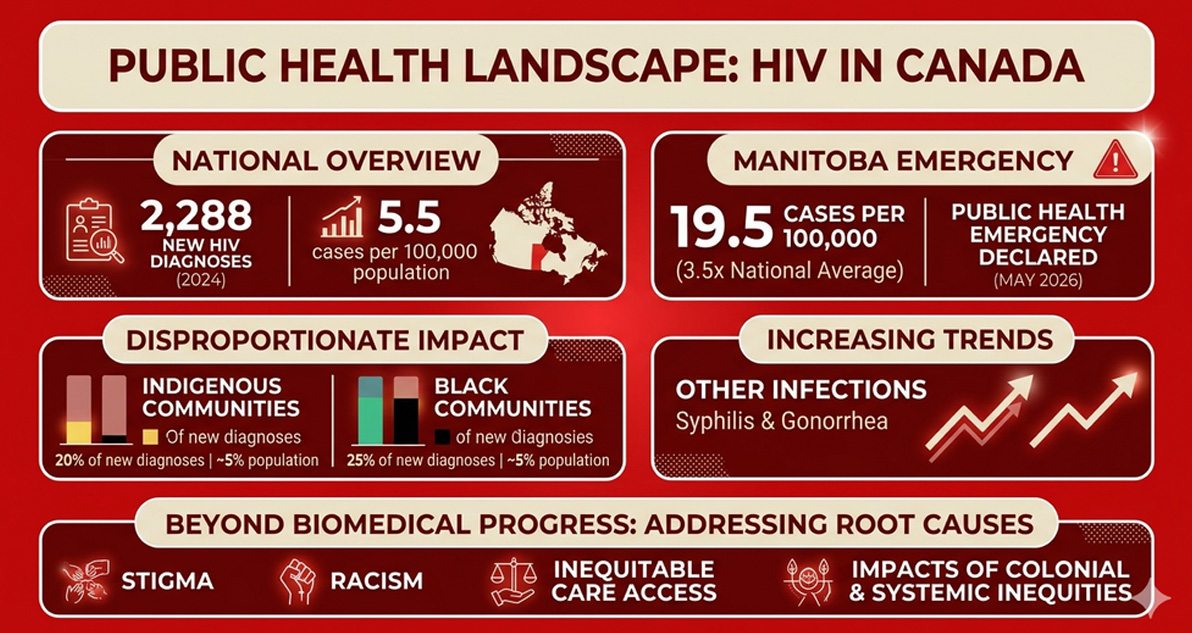
The discussions took place in the context of a complex and evolving public health landscape. HIV remains a significant global public health challenge, and while Canada has achieved important scientific and medical advances in prevention and treatment, notable gaps persist. In 2024, Canada reported 2,288 new HIV diagnoses, corresponding to a national rate of 5.5 per 100,000 population. In Manitoba, HIV rates are 3.5 times higher than the national average at 19.5 cases per 100,000, resulting in the province declaring a public health emergency in May 2026. The burden of HIV continues to fall disproportionately on certain populations, particularly Indigenous and Black communities, who accounted for approximately 20% and 25% of new diagnoses respectively, despite each representing about 5% of the population. At the same time, rates of other sexually transmitted and blood-borne infections, including syphilis and gonorrhea, have increased markedly over the past decade. Together, these trends highlight that biomedical progress alone is insufficient and underscore the need for sustained attention to the social and structural determinants of health, such as stigma, racism, inequitable access to care, and the ongoing impacts of colonial and systemic inequities.
Long description
This infographic is titled "Public Health Landscape: HIV in Canada." Information is organized into five sections that summarize key HIV-related public health statistics and challenges in Canada.
National Overview
The first section presents national HIV statistics for Canada in 2024. It reports:
- 2,288 new HIV diagnoses in Canada.
- 5.5 cases per 100,000 population.
Manitoba Emergency
The second section highlights the HIV situation in Manitoba:
- 19.5 cases per 100,000 population, which is approximately 3.5 times the national average.
- A public health emergency was declared in May 2026.
Disproportionate Impact
The third section illustrates the unequal burden of HIV among specific populations in Canada.
For Indigenous communities:
- Indigenous people account for 20% of new HIV diagnoses, while they represent approximately 5% of the Canadian population.
For Black communities:
- Black people account for 25% of new HIV diagnoses, while they represent approximately 5% of the Canadian population.
Increasing Trends
The fourth section notes increase in other sexually transmitted and blood-borne infections such as syphilis and gonorrhea.
Beyond Biomedical Progress: Addressing Root Causes
The final section emphasizes that, in addition to biomedical advances, addressing HIV requires action on broader social and structural factors. Four key factors are identified:
- Stigma
- Racism
- Inequitable access to care
- Impacts of colonial and systemic inequities
Key Points
Throughout the event, speakers emphasized the central role of community-based research in diagnosing, treating, and preventing HIV and STBBI. Opening remarksFootnote 1 highlighted that research is most effective when it is co-developed with communities and informed by people with lived and living experience. Community-based organizations and people with lived and living experience of HIV and STBBI were recognized not only as service providers, but as essential partners in generating knowledge, shaping research priorities, and ensuring that findings are translated into practice and policy. This perspective reflects a broader shift toward more inclusive and participatory approaches to research, where community leadership is understood as a critical driver of impact.
The panel discussionFootnote 2 reinforced the importance of sustained collaboration between researchers, communities, and public health systems. Panelists emphasized that Canada's ability to meet the World Health Organization (WHO)'s 2030 global STBBI targets is closely tied to meaningful and ongoing community engagement in research. They discussed the ways in which community-driven research improves access to culturally-relevant services, strengthens trust in health systems, and produces evidence that is directly applicable to real-world contexts. The discussion also underscored the consequences of withdrawing or reducing funding, noting that community capacity, partnerships, and frontline services are highly dependent on stable and sustained investment.
A key component of the event was highlighting the expertise of people with lived and living experience. Their personal reflections illustrated how research and community-based programs intersect with individuals' lives, contributing not only to improved health outcomes but also to dignity, inclusion, and empowerment. These perspectives reinforced the message that HIV and STBBI are not solely biomedical issues, but also social and equity challenges that require holistic and community-informed responses. This includes recognizing the distinct realities of First Nations, Inuit, and Métis communities, where intersecting social determinants of health, systemic discrimination, and intergenerational trauma—alongside inequitable access to culturally appropriate care—contribute to a disproportionate burden of HIV and STBBI.
Presentations from CIHR-funded research teamsFootnote 3 provided concrete examples of how federal investments are delivering impact. These projects demonstrated advances across prevention, testing, care, and treatment, and showed how community-based research approaches are improving the relevance, uptake, and effectiveness of interventions. The work presented reflected a strong alignment with federal priorities under the STBBI Action Plan (2024–2030) and illustrated the value of integrating research, policy, and service delivery to address complex public health issues.
A consistent theme throughout the event was the importance of sustained federal leadership. Participants emphasized that CIHR's HIV/AIDS and STBBI Research Initiative, which supports research across biomedical, clinical, health systems, and community-based domains, plays a critical role in enabling innovation and supporting evidence-based decision-making. At the same time, they noted that global uncertainties and shifting policy environments could threaten progress, reinforcing the need for Canada to maintain and strengthen its commitment to research and community partnerships.
Looking ahead
The event concluded with a call to action to continue investing in research grounded in equity, collaboration, and tangible impact. Discussions underscored that achieving Canada's 2030 STBBI targets will depend on sustained funding, strong cross-sector partnerships, and continued engagement with the communities most affected. More broadly, the event highlighted the importance of ensuring the federal investments translate into meaningful outcomes for Canadians, particularly those facing the greatest barriers to health and care.
Overall, Impact in Action demonstrated that community-based research is a cornerstone of Canada's HIV and STBBI response, illustrating how federal funding drives innovation, strengthens community capacity, and improves health outcomes, while reinforcing the need for continued leadership to sustain progress toward national and global goals.
Acknowledgements
The organizers of this event extend sincere gratitude to all those who contributed to its success.
Co-Hosts and Partners
The Honourable Senator René Cormier, the AIDS Committee of Ottawa (ACO), and the Canadian Institutes of Health Research (CIHR).
Opening Speakers
Khaled Salam; The Honourable Senator René Cormier; Dr. Charu Kaushic; Dr. Vera Caine; Dr. Joss Reimer.
Panelists
Dr. Charu Kaushic (Moderator); Dr. Amos Buh; Dr. Patrick O'Byrne; Dr. Jason Brophy; Mr. Matthew Fleury; Ms. Doris Peltier.
Presenters
Dr. Patrick O'Byrne; Dr. Alexander McClelland; Dr. Yin Yuan Chen; Mr. Keith Wong; Dr. Jonathan Angel; Dr. Roula Kteily-Hawa.
Lived Experience Speaker
Asif Ali.
Ceremonial Contributors
Grandmother Irene Compton.
Finally, we thank all participants, community members, researchers, and partners who attended and contributed to the dialogue. Your engagement, collaboration, and dedication to advancing equitable health outcomes are essential to achieving Canada's HIV and STBBI goals.
Together, your contributions made this event a meaningful and impactful platform for knowledge sharing, collaboration, and action.
- Date modified: