Mobilizing Knowledge for Health, Societal and Economic Impacts
A Canadian Knowledge Mobilization Strategy and Action Plan
Table of Contents
- Land Affirmation
- Executive Summary
- Knowledge Mobilization for Health, Societal and Economic Impacts
- Knowledge Mobilization Conceptualization
- Knowledge Mobilization Strategy and Action Plan
- Conclusion
- Acknowledgements
- Illustrations
Land Affirmation
This document has been prepared by the Canadian Institutes of Health Research (CIHR), headquartered in Ottawa, Ontario, Canada. CIHR recognizes that its headquarters is located on the unceded, unsurrendered Territory of the Algonquin Anishnaabeg Nation whose presence reaches back to time immemorial, and who are the traditional guardians of this land.
CIHR pays respect to all First Nations, Inuit and Métis Peoples from coast to coast to coast, and to the land they have cared for long before today.
Executive Summary
People living in Canada face many health challenges, and the full breadth of health research is needed to drive effective, efficient, and sustainable solutions. As powerful new tools such as artificial intelligence accelerate discovery, CIHR recognizes the opportunity — and responsibility — to lead a major charge toward innovation and the optimization of research impact. To achieve this impact, the agency is ensuring that research is prioritized and shaped by a diversity of perspectives, and that emerging knowledge is accessible, representative, relevant, timely and ultimately leads to improved health outcomes, societal benefits and prosperity.
CIHR's Act includes the mobilization of knowledge into improved health, more effective health services and products, and strengthened health care systems. This knowledge mobilization (KM) component of the agency's mandate is an essential pathway for moving excellent research to impact.
Driven by this commitment, CIHR has renewed its KM Strategy and Action Plan alongside associated investments. This Strategy positions CIHR to enhance its global leadership in this area, building on over two decades of success in advancing knowledge translation (KT) practice and science.
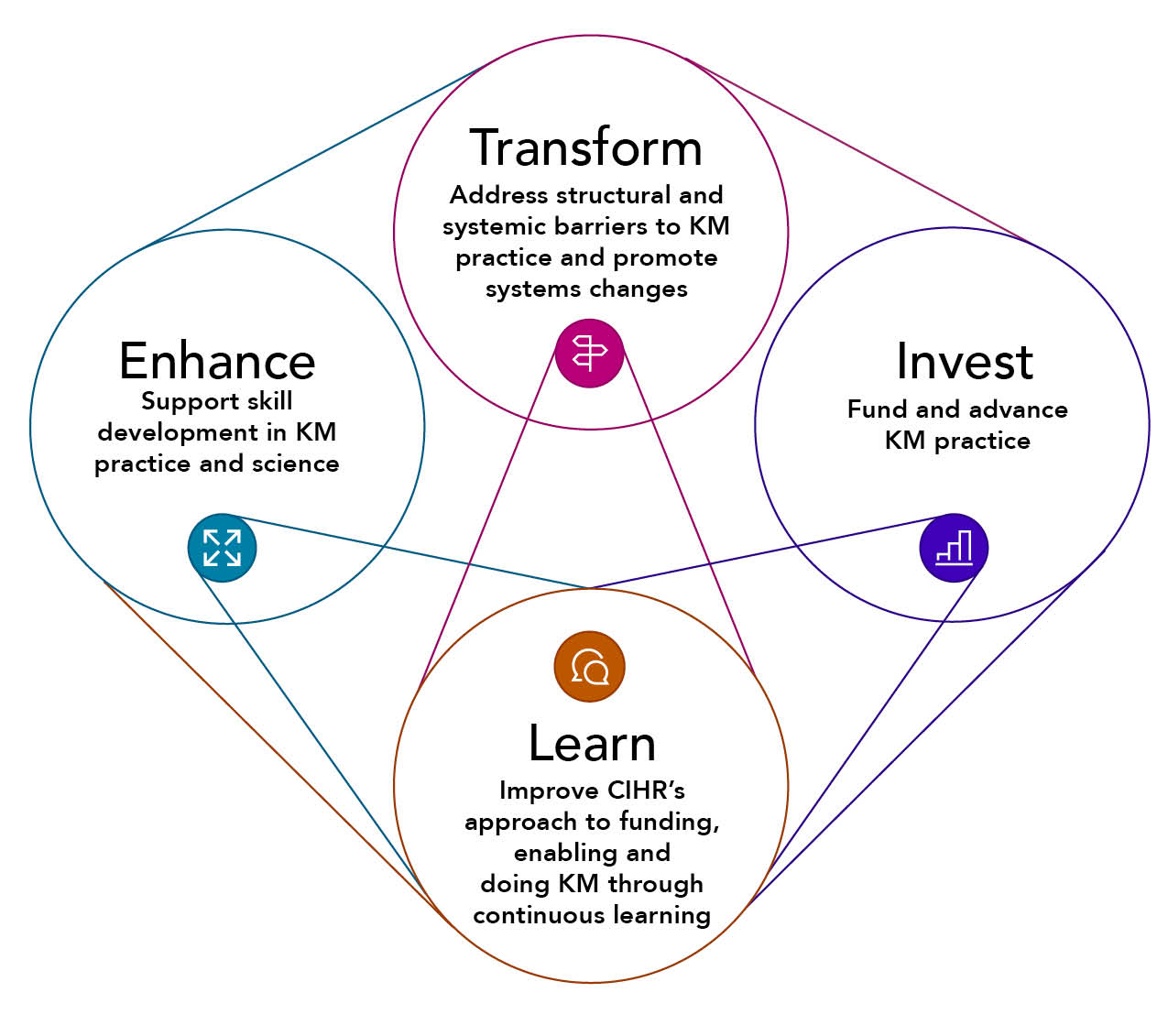
The Strategy offers an updated conceptualization of KM, including definitions of KM practice (which encompasses commercialization) and KM science. These definitions are relevant to all four pillars of health research — biomedical research; clinical research; health services research; and social, cultural, environmental and population health research. The Strategy also outlines four intersecting streams of impact-oriented work, focused on addressing pressing KM challenges and opportunities within the health research landscape:
Long description
Four spheres in a diamond shape represent the four connected streams of work in the KM Strategy and Action Plan.
Enhance, Transform and Invest are individually connected to Learn by thin lines that resemble conveyor belts, representing continuous learning within those Streams of work. A similar line encircles all four Streams together, representing the interconnectedness of all Streams.
The text within each circle starting clockwise is:
- Enhance: Support skill development in KM practice and science
- Transform: Address structural and systemic barriers to KM practice and promote systems changes
- Invest: Fund and advance KM practice
- Learn: Improve CIHR's approach to funding, enabling and doing KM through continuous learning
An associated Action Plan outlines the activities CIHR will undertake within each stream to ensure a consistent and coherent integration of KM across the agency's policies, processes, programs and partnerships.
Working alongside the research community and valued partners, our goal is to ensure excellent health research contributes to positive health (including health services and health care systems), societal and economic impacts.
Of note, commercialization and collaboration with industry are recognized as valued types of KM and therefore are within the scope of this Strategy and Action Plan. However, a separate CIHR Commercialization and Industry Collaboration Strategy and Action Plan will be forthcoming.
Knowledge Mobilization for Health, Societal and Economic Impacts
As the Government of Canada's health research funding agency, CIHR is mandated to create new knowledge and to mobilize trusted knowledge into improved health, more effective health services and products, and strengthened Canadian health care systems. The CIHR Act states that KM is to be accomplished by promoting the dissemination and application of health research to improve the health of Canadians; collaborating with provinces and territories to advance research and promote its use; and facilitating the commercialization of health research and promoting economic development through health research in Canada.
Since its inception, CIHR has been a global leader in shaping the field of KM, building associated skills and capacity, and bridging knowledge-to-action gaps. In the early 2000s, the agency adopted the Knowledge to Action Framework and subsequently used this Canadian innovation to ground its KM strategies.
Over the past 25 years, CIHR has produced KM resources, launched innovative KM funding programs and strategic initiatives, implemented policies to enable co-produced research and open science, and co-delivered brokering events to inform policy and practice decisions. In particular, CIHR's Institutes and strategic initiatives have championed important and innovative ways of moving knowledge into action. As just one example, since its launch in 2011, the Strategy for Patient-Oriented Research (SPOR) has helped to embed patient- and community-oriented methodologies into mainstream research practices, resulting in collaborative impacts such as policy changes, gains in healthcare delivery efficiencies, and improvements in patient health outcomes and quality for life.
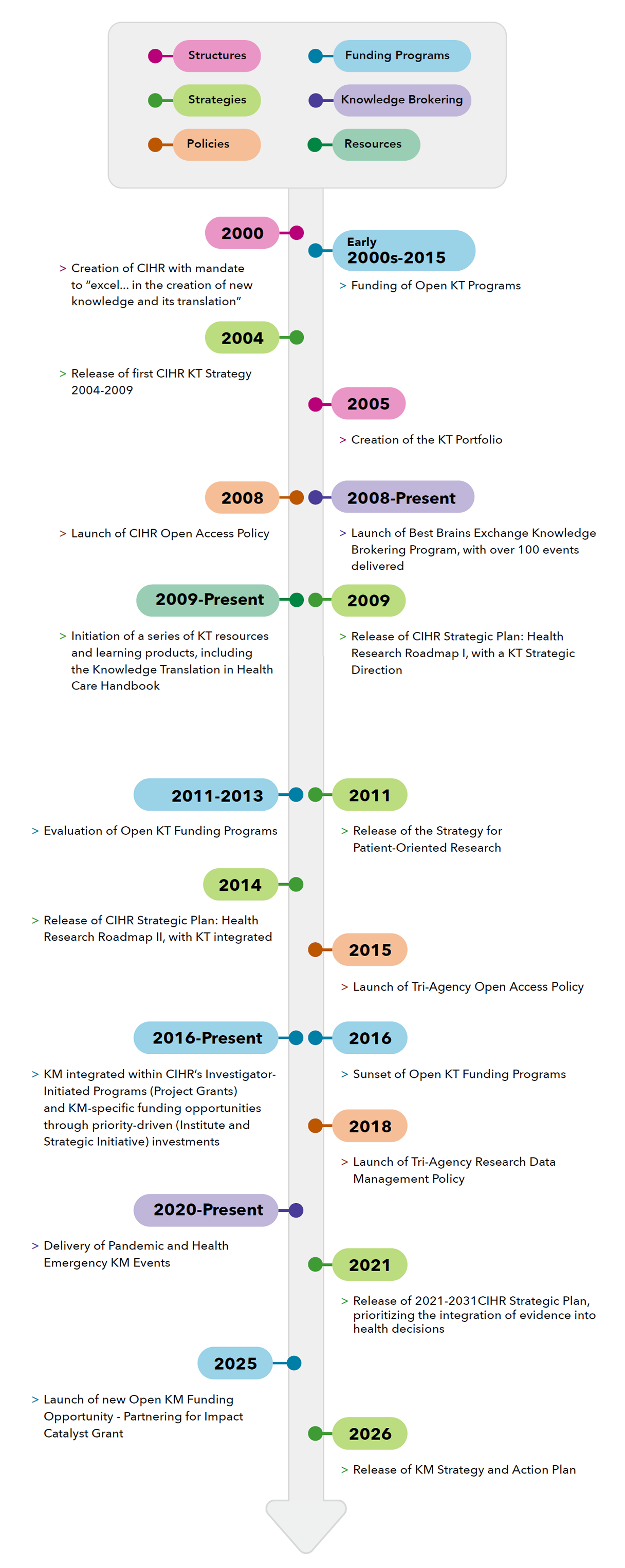
Key Milestones in the Evolution of Knowledge Mobilization at CIHR
Long description
This graphic is titled "Key Milestones in the Evolution of KM at CIHR" and depicts a timeline spanning from 2000 to 2026, marked with a sampling of events that are significant to KM at CIHR. The events are grouped according to the following categories: structures, strategies, policies, funding programs, knowledge brokering and resources.
The events are listed below by category and in chronological order.
Structures
- 2000: Creation of CIHR with mandate to "excel…in the creation of new knowledge and its translation"
- 2005: Creation of the KT Portfolio
Strategies
- 2004: Release of first CIHR KT Strategy
- 2009: Release of CIHR Strategic Plan: Health Research Roadmap I, with a KT Strategic Direction
- 2011: Release of the Strategy for Patient-Oriented Research
- 2014: Release of CIHR Strategic Plan: Health Research Roadmap II, with KT integrated
- 2021: Release of 2021-2031 CIHR Strategic Plan, prioritizing the integration of evidence into health decisions
- 2026: Release of KM Strategy and Action Plan
Policies
- 2008: Launch of CIHR Open Access Policy
- 2015: Launch of Tri-Agency Open Access Policy
- 2018: Launch of Tri-Agency Research Data Management Policy
Funding Programs
- Early 2000s-2015: Funding of Open KT Programs
- 2011-2013: Evaluation of Open KT Funding Programs
- 2016: Sunset of Open KT Programs
- 2016-Present: Integration of KM within CIHR's Investigator-Initiated Programs (Project Grants) and KM-specific funding opportunities through priority-driven (Institute and Strategic Initiative) investments
- 2025: Launch of new Open KM Funding Opportunity – Partnering for Impact Catalyst Grant
Knowledge Brokering
- 2008-Present: Launch of Best Brains Exchange Knowledge Brokering Program, with over 100 events delivered
- 2020-Present: Delivery Pandemic and Health Emergency KM events
Resources
- 2009-Present: Initiation of a series of KT resources and learning Products, including the Knowledge Translation in Health Care Handbook
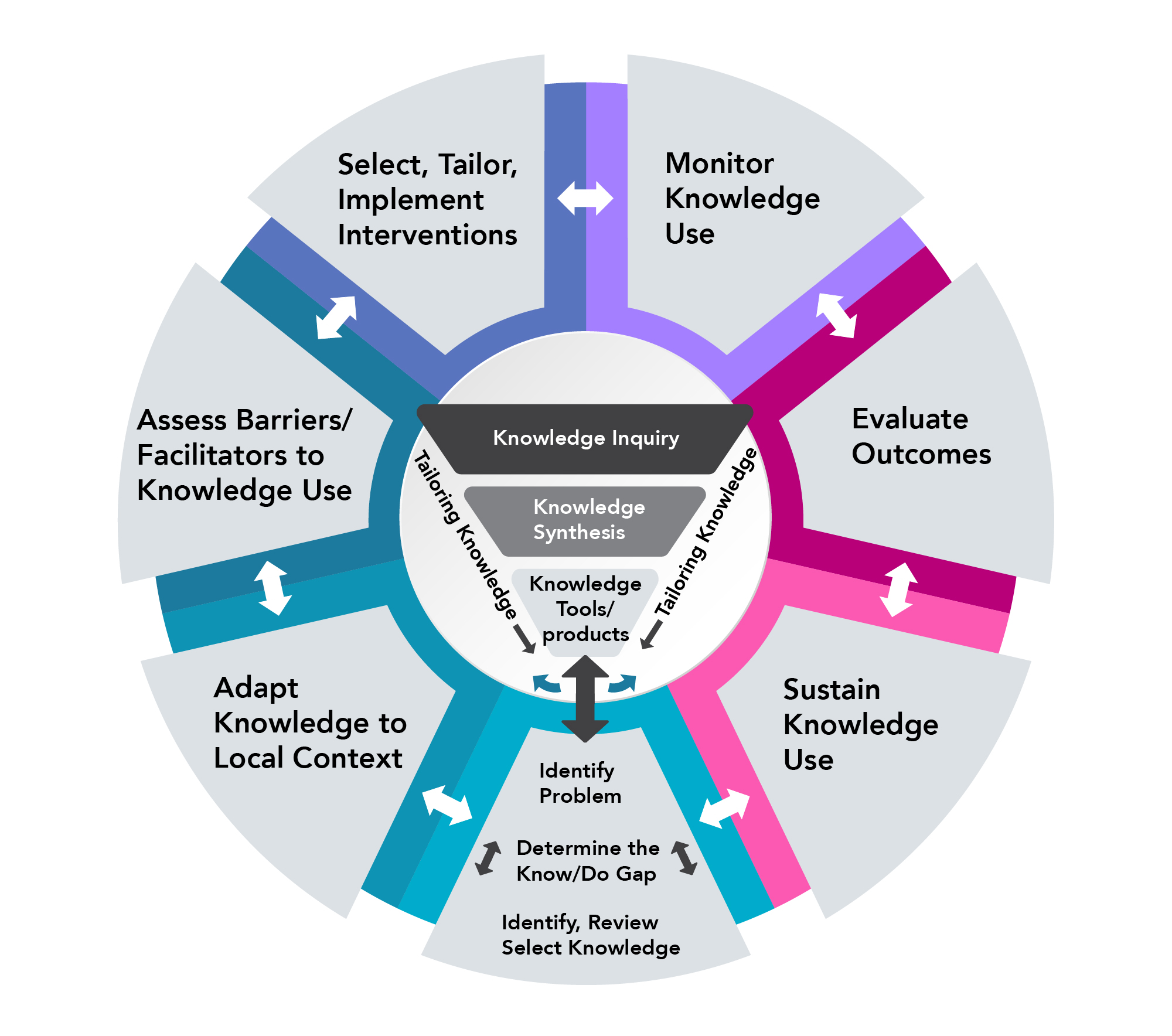
Spotlight on Canadian KM Leadership: The Knowledge to Action FrameworkFootnote 1
The Knowledge to Action Framework has been cited over 4,000 times (as of April 2024) and widely adopted around the world. In fact, it is the most frequently cited dissemination and implementation research frameworkFootnote 2, and the original paper describing the framework is one of the most cited medical education articles of all time.Footnote 3 The Knowledge to Action Framework has been translated into French, German, Norwegian, Portuguese and Chinese, and it is used to structure the best selling book "Knowledge Translation in Healthcare: Moving from Evidence to Practice" (the 3rd edition is underway).
Long description
This figure illustrates the knowledge to action process. The knowledge creation funnel at the centre of the image consists of three phases which appear in the following order from the top of the funnel, which is the widest, to the bottom, which is the narrowest: Knowledge Inquiry, Knowledge Synthesis, and Knowledge Tools/Products. The term "Tailoring Knowledge" appears along the right-hand length of the funnel. Arrows are circling the funnel to illustrate that the knowledge creation phases can influence the action phases at several points along the circle.
The action cycle surrounding the funnel consists of seven phases, connected with bidirectional arrows: At the bottom of the cycle is: Identify Problem, Determine the Know/Do Gap and Identify, Review, Select Knowledge. In clockwise order, the remaining phases are: Adapt Knowledge to Local Context; Assess Barriers/Facilitators to Knowledge Use; Select, Tailor, Implement Interventions; Monitor Knowledge Use; Evaluate Outcomes; and Sustain Knowledge Use.
Key Challenges and Gaps in Knowledge Mobilization
Despite the Government of Canada's investments, research findings still often remain unavailable or underutilized by knowledge users, including people with lived experience, communities, health practitioners, policy-makers, and other researchers. For example, a recent systematic review — looking at 174 studies and representing 228 clinical practices and 28 million Canadians — found the rate of inappropriate care to have a median proportion of 30%.Footnote 4 This means that approximately 3 out of 10 patients in these studies did not receive the appropriate health care, potentially leading to negative patient experiences, poor health outcomes and inefficient use of resources.
In the context of post-pandemic recovery and Canadian health care system challenges, there is an even greater need to enable the rapid and tailored sharing of research findings to support decision-making by knowledge users. In addition, recognition of discrimination and health inequities across Canada have highlighted the importance of supporting research that is driven by the needs of communities and founded on respectful, authentic and inclusive partnerships with those who produce, use and are affected by health research.
To better understand the current KM context, CIHR commissioned a comprehensive environmental scanFootnote 5 and undertook extensive pan-Canadian and international engagements with diverse groups of researchers, experts in KM practice and science, policy-makers, health practitioners, health research funders, First Nations, Inuit and Métis researchers and organizations, and patient and community groups.
These scanning and engagement activities resulted in the identification of the following key KM-related challenges and gaps:
- Insufficient skills and capacity to undertake KM practice and science across diverse contributors to research.
- Systemic barriers to advance KM practice, including:
- Lack of incentives and enablers for all components of KM practice, thereby reducing its relevance and likelihood of research use.
- Limited consideration of equity, diversity, inclusion, intersectionality and Indigenous ways of knowing and doing.
- Underdeveloped and uncoordinated evidence-support infrastructure, including priority setting, knowledge synthesis, data analytics and knowledge brokering activities.
- Lack of recurring, predictable KM-specific funding opportunities.
- Lack of CIHR indicators and processes to evaluate research impacts deriving from KM.
These insights were used to inform the renewed KM Strategy and Action Plan. This Strategy and Action Plan builds on the success of KT activities led and supported by CIHR over the past 25 years while transitioning the agency towards a more proactive, comprehensive, coordinated and committed approach to moving knowledge into action.
From Translation to Mobilization
This document marks a transition in terminology, with the agency shifting from using the term 'knowledge translation (KT)' to 'knowledge mobilization (KM)'. CIHR's definition of KM retains key elements of KT while providing greater specificity, including a heightened focus on the importance of knowledge users, knowledge holders and diverse concepts of knowledge, and the use of new or existing knowledge to inform action. Consideration of Indigenous rights, equity, diversity and inclusion are central to CIHR's approach to both the practice and science of KM.
Knowledge Mobilization Conceptualization
At CIHR, KM is defined as the process of moving different types of knowledge into future research, policy, practice and the public sphere, with the goal of improving health, supporting more effective health services and products, and strengthening health care systems. KM is relevant to all four pillars of health research, although the KM approach used may differ by pillar. The term 'moving' refers to the implementation and de-implementation, scaling and de-scaling, spreading and sustaining the use of knowledge by all relevant interest-holders to whom the research is relevant. The reference to different types of knowledge encompasses evidence generated through research, Indigenous ways of knowing, and knowledge gained through lived experience.
CIHR recognizes and supports two broad types of KM: KM practice and KM science (also known as implementation science).
KM Practice:
- Research co-production: Research approach that meaningfully engages potential knowledge users and/or knowledge holders as equal partners in the research process.
- Community-led research for action: Research approach where community is meaningfully empowered to lead on identifying and prioritizing issues, designing research projects, collecting and analyzing data, and using findings to drive solutions responsive to community needs.
- Indigenous-led solutions-focused health and wellness research: Health and/or wellness research led and conducted by Indigenous researchers and communities, grounded in, and engaged with, First Nations, Inuit or Métis communities, societies or individuals and their wisdom, cultures, experiences, or knowledge systems, as expressed in their dynamic forms, past and present. This health research offers culturally appropriate solutions and contributes to Indigenous research self-determination.
- End-of-grant or project KM: Process of sharing research findings with relevant audiences during and/or after a project. It can range from more passive diffusion activities like publishing and presenting at conferences, to more intensive and tailored dissemination efforts such as infographics or briefings.
- Commercialization: Process focused on bringing intellectual property — new products, tools, or services — to a state of use in the private, not-for-profit, or public sectors.
- Knowledge synthesis: Process of contextualizing and integrating research findings within the larger body of knowledge on the topic.
- Knowledge brokering: Activities focused on linking decision-makers with researchers, facilitating interactions so that they are able to better understand each other's goals, influence each other's work, forge new partnerships, and promote the use of research-based evidence in decision-making.
- Ethically sound implementation, spreading and sustaining knowledge use, and scaling impact: Iterative process by which knowledge is considered, put into practice or used to improve health and the health system; activities must be consistent with ethical principles and norms, social values and legal and other regulatory frameworks.
KM Science:
-
KM Science: Study of methods, processes, approaches and strategies to effectively and efficiently support evidence-informed decision-making and achieve outcomes.
It is critical for advancing the understanding of how the application of knowledge differs across contexts and populations, and for identifying effective strategies to influence change.
KM Practice
The practice of KM is about making knowledge users, knowledge holders, communities and organizations aware of knowledge and facilitating its use to inform further research and improve health services, health care systems and ultimately health outcomes. It seeks to close the gap between what we know and what we do (the know-do gap) by identifying and addressing barriers and impediments that slow the use of knowledge from all four health research pillars. Ideally, KM practice involves applying insights gained from KM science to accelerate the implementation, scale, spread and sustained use of knowledge in the real world.
Drawing on aspects of CIHR's previous definition of KT, KM practice is conceptualized as a dynamic and iterative process that includes: research co-production (formerly referred to as integrated KT); community-led research for action; Indigenous-led solutions-focused health and wellness research; end-of-grant KM; commercialization; knowledge synthesis; knowledge brokering; and ethically sound implementation, spreading and sustaining knowledge use, and scaling impact.
KM practices should be intentional and context-specific, and must be founded on respectful, authentic and inclusive relationships between those who produce, use and are affected by health research. CIHR's approach to KM practice is intended to optimize research impact by prioritizing health equity; encouraging KM for, with and by diverse communities; and embracing varied ways of knowing and doing. In addition, KM practices involving First Nations, Inuit and Métis Peoples and communities need to be co-developed, and designed to ensure that research findings are culturally safe, community-driven, and community-owned with outcomes that are meaningful and beneficial to Indigenous Peoples. This practice is critical for recognizing that Indigenous Peoples and communities either lead research or are equal partners and knowledge holders in research.
The expectation is that the most appropriate KM practices will be used to achieve the most appropriate KM goals (such as raising awareness of research findings among researchers or other potential users of the knowledge, influencing decision-making and influencing behavior). Examples of the KM approaches most likely to be relevant by research pillar include:
- Biomedical research: end-of-grant KM, commercialization, knowledge synthesis, and ethically sound implementation of knowledge (and maybe co-production)
- Clinical research: co-production, end-of-grant KM, knowledge synthesis, and ethically sound implementation, spreading and sustaining knowledge use, and scaling impact (and maybe commercialization)
- Health services research: co-production, end-of-grant KM, knowledge synthesis, and ethically sound implementation, spreading and sustaining knowledge use, and scaling impact (and maybe community-led research, Indigenous-led solutions-focused health and wellness research, or commercialization)
- Social, cultural, environmental and population health research: co-production, community-led research, Indigenous-led solutions-focused health and wellness research, end-of-grant KM, knowledge synthesis, and ethically sound implementation, spreading and sustaining knowledge use, and scaling impact (and maybe commercialization)
CIHR continues to promote the concept of judicious KM, through thoughtful and ethical KM approaches that optimize benefits and minimize harms. Judicious KM is about: avoiding harms from premature implementation of weak, inconclusive, or methodologically poor research; balancing opportunity costs, resource allocation and potential unintended consequences; aligning KM activities with the credibility, strength and significance of research findings; ensuring they are appropriate and culturally sensitive; and considering Gender Based Analysis Plus (including intersectionality), as appropriate, to ensure equitable and effective implementation. The integration of Indigenous ways of knowing and knowledge gained through lived experience would also need to be scrutinized by knowledge holders and knowledge users, to help ensure their use is appropriate and culturally sensitive.
KM Science
KM science is the scientific study of methods, processes, approaches and strategies to effectively and efficiently support evidence-informed decision-making and achieve outcomes (including health outcomes and health system outcomes). KM science is critical for advancing the understanding of how the application of knowledge differs across contexts and populations, and for identifying effective strategies to influence change. Of note, KM science (research that generates knowledge on how to effectively do KM practice) is different from KM practice (moving knowledge into action).
Knowledge Mobilization Strategy and Action Plan
The KM Strategy and Action Plan outlines an approach for leading and supporting KM practice and science. Its overarching aim is to optimize the relevance and positive impact of health research. It has therefore been purposefully designed to address the key KM challenges and gaps identified above via four streams of impact-oriented work: Enhance, Transform, Invest and Learn. An associated implementation plan has been developed, identifying accountabilities, resources and timelines for each activity, and CIHR welcomes working with partners across the health research ecosystem to optimize the plan's delivery.
The Strategy in Action
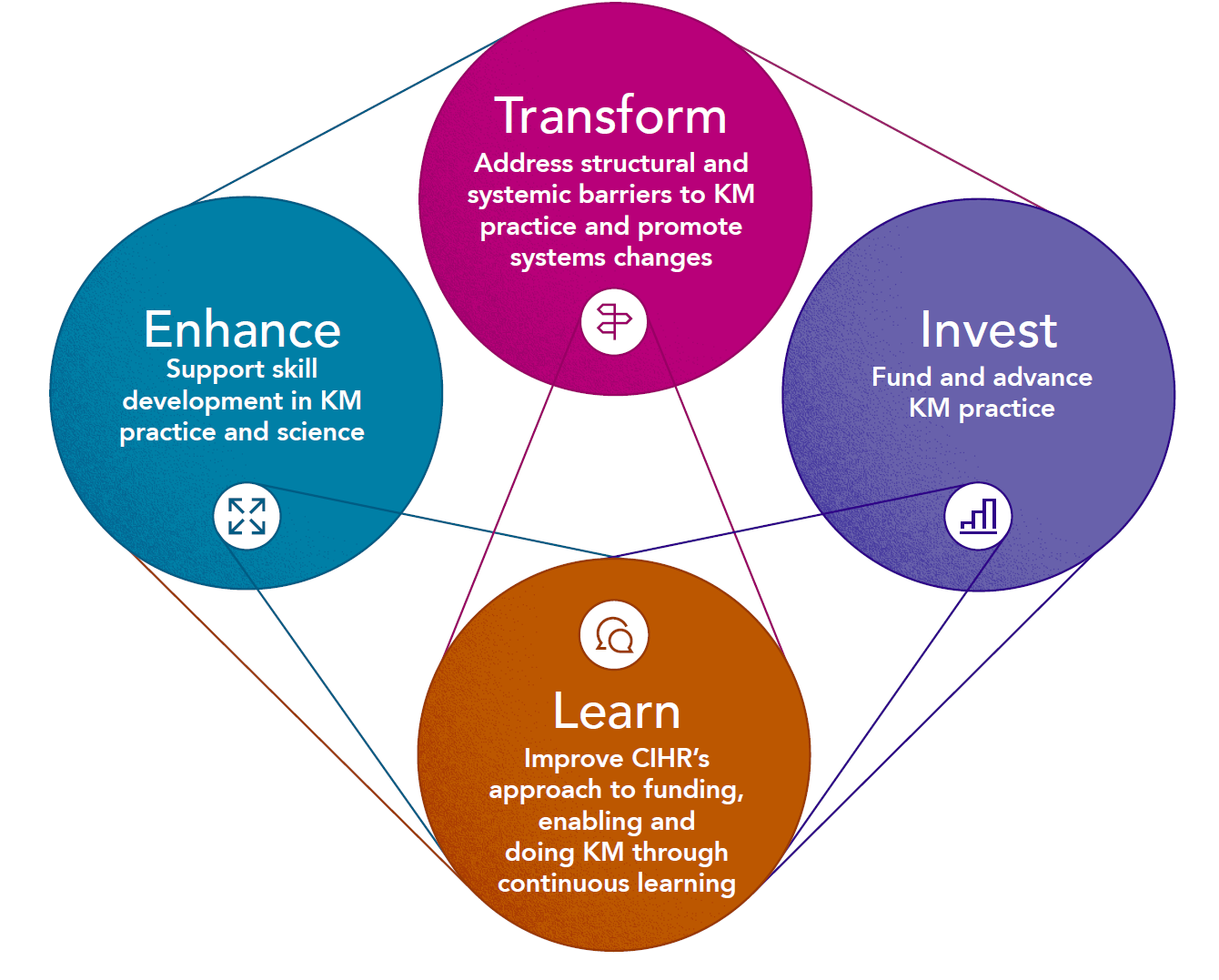
The KM Strategy is comprised of four intersecting streams of work with the aim of optimizing research use and benefits for society.
Long description
Four spheres in a diamond shape represent the four connected streams of work in the KM Strategy and Action Plan.
Enhance, Transform and Invest are individually connected to Learn by thin lines that resemble conveyor belts, representing continuous learning within those Streams of work. A similar line encircles all four Streams together, representing the interconnectedness of all Streams.
The text within each circle starting clockwise is:
- Enhance: Support skill development in KM practice and science
- Transform: Address structural and systemic barriers to KM practice and promote systems changes
- Invest: Fund and advance KM practice
- Learn: Improve CIHR's approach to funding, enabling and doing KM through continuous learning
Enhance
Strengthen skills and increase knowledge in both the practice and science of KM across the health research ecosystem.
Objective
Advance health research impact by supporting skill development in KM practice and science.
Background
Knowledge regarding how to conduct effective KM continues to be a key gap across the health research ecosystem. Therefore, researchers, knowledge users, trainees and peer reviewers need accessible and tailored resources that cover fundamental concepts such as research co-production, community-led research, knowledge synthesis, knowledge brokering, effective communication strategies, end-of-grant KM and equity-oriented implementation.
This skills gap will be addressed in partnership with other national and international funders, organizations and KM experts, many of whom have already created KM training products, activities and/or resource compilations. As such, in the Enhance stream, CIHR will leverage and promote existing KM resources, and develop new resources as needed to fill priority learning gaps and highlight exemplars of strong KM practice. CIHR will also continue to offer Project Grant, award and fellowship opportunities that can support researchers and trainees to enhance skills and capacity specific to KM science.
Action Plan
Goal 1: Develop and promote KM tools and resources
Strategy 1: Develop new and amplify existing training products for researchers, knowledge users, peer reviewers and CIHR staff to enhance skills in KM practice and science
Actions
- Develop a casebook that illustrates successful KM practices in different contexts, including all four pillars of health research Term: Short (1 - 2 years)
- Develop a curated repository of existing KM training materials to enhance knowledge and skills in various areas of KM practice and science Term: Short (1 - 2 years) and ongoing
- Update the CIHR KM planning guide as a resource for applicants to increase understanding of how to judiciously integrate KM practice within grant applications Term: Short (1 - 2 years)
- Develop guidance for and train peer reviewers to critically assess the strength of KM practice components in grant applications (aligned with the KM planning guide for applicants) Term: Short (1 - 2 years)
- Develop resources for knowledge users to position them to better engage in or with research, such as plain-language guides for leading or co-leading research projects and using evidence in decision-making Term: Medium (3 - 5 years)
Goal 2: Continue investments in building skills and capacity in the field of KM science
Strategy 1: Fund programs that allow for training and career support specific to KM science
Actions
- Continue to support fellowship, postdoctoral and other programs that allow for training and/or mentorship in the area of KM science Term: Ongoing
- Continue to enable training and/or career support in KM science through funding of Project Grants specifically focused in this area. Term: Ongoing
Transform
Strengthen approaches for addressing impediments to using research within the health research ecosystem and broader society.
Objective
Advance health research impact by addressing barriers to KM practice and promoting evidence-informed decision-making.
Background
During engagements, interest holders confirmed that organizational and systemic barriers to moving knowledge into practice and policy persist throughout the Canadian health research and broader healthcare ecosystems. Examples include a lack of incentives and recognition for diverse KM practice activities, power imbalances associated with who can hold CIHR funding and issues of research being underused when it is not designed to address the priorities of those positioned to use or act on findings.
Engagements also highlighted the lack of systematic consideration of equity, diversity and inclusion throughout research and KM (practice and science), and that better enablers are required to support authentic and meaningful research co-produced or research led by under-served communities.
Engagements with First Nations, Métis and Inuit researchers and organizations emphasized that KM terminology and approaches often do not resonate with Indigenous ways of knowing and doing. More avenues are needed to ensure research can be meaningfully driven by the needs of Indigenous communities, and that resulting insights are shared using culturally safe and meaningful ways.
The COVID-19 pandemic response also highlighted the need for updated approaches to support the use of evidence in future research, policy, practice and the public sphere. This need includes exploring ways to better coordinate investments in evidence-support infrastructure, both nationally and internationally; to modernize and expand CIHR's knowledge brokering offerings; and to expand opportunities for embedded trainees and researchers poised to support the real-time integration of evidence within organizational decision-making.
As such, through the Transform stream, CIHR will focus on removing barriers to co-produced, community-led research, and Indigenous-led solutions-focused health and wellness research, and facilitating the timely movement of research findings into federal, provincial and territorial policy, practice and public use.
Action Plan
Goal 1: Implement updated expectations for the responsible and ethical sharing and management of research findings
Strategy 1: Update and implement open science policies
Actions
- Update and implement open science policies requiring free, immediate access to publications to the widest possible audience (researchers and other knowledge users), responsible research data management and mandatory deposit of research data Term: Ongoing
Strategy 2: Enforce expectations regarding end-of-grant sharing of research findings with consideration of cultural safety, accessibility and official languages
Actions
- Raise awareness of accessibility and official languages requirements related to sharing findings in alignment with the CIHR Accessibility Plan and the CIHR Policy Statement on Official Languages Term: Ongoing
- Require researchers (when relevant) to share findings from research with communities and study participants in timely, culturally safe and meaningful ways Term: Short (1 - 2 years)
Goal 2: Remove barriers for co-produced, community-led research, and Indigenous-led solutions-focused health and wellness research
Strategy 1: Facilitate research conducted with and by knowledge users, knowledge holders, communities and health organizations
Actions
- Continue funding and brokering activities that help foster partnerships between researchers and knowledge user or holder partners, communities and organizations who use and are affected by research Term: Ongoing
- Revise CIHR's funding policies to broaden who can apply for and administer funds (e.g., knowledge users, Indigenous communities and health system organizations) Term: Ongoing
- Develop guidance and requirements to promote equal partnership between researchers and knowledge users/holders during co-production Term: Medium (3 – 5 years)
Goal 3: Expand support for evidence-informed decision-making
Strategy 1: Strengthen CIHR-led knowledge brokering programs and services specific to providing decision-makers with high-quality, timely evidence
Actions
- Create an expanded suite of CIHR-led knowledge brokering offerings for federal, provincial and territorial policy partners with enhanced products and services to facilitate the use of evidence in health-related decision-making (this would include modernizing and expanding the Best Brains Exchange program, and could include adding additional offerings such as rapid reviews and CIHR-driven deliberative dialogues) Term: Conditional (resource dependent)
Invest
Invest in new and enhanced KM funding opportunities focused on improving health (including health services and health care systems), societal and economic impacts.
Objective
Advance health research impact through new and enhanced funding opportunities specifically focused on KM practice.
Background
A key theme heard during engagements was the absence of dedicated, adequate and consistent funding for KM practice.
Interest holders emphasized the desire for a suite of recurring incremental KM funding opportunities that would enable a progression of KM practice activities. From the perspective of co-produced research, interest holders highlighted the lack of financial support to cover the time and resources required to bring together researchers, knowledge users and knowledge holders to set research priorities and co-design and co-conduct research projects. Another common request shared was for the return of a dedicated program supporting implementation, scaling, spreading and sustaining of health research findings.
As such, through the Invest stream, CIHR will fund a dedicated suite of KM practice programs designed specifically to enable impact. The first programs to be introduced will focus on fostering partnerships, and co-produced, community-led and/or Indigenous-led research that responds to pressing societal health needs requiring solutions and their implementation, scaling, spreading and sustaining across different contexts and populations.
Action Plan
Goal 1: Invest in a new suite of KM practice programs to optimize impact
Strategy 1: Provide dedicated recurring funding to catalyze diverse partnerships and co-production.
Actions
- Fund a new recurring Partnering for Impact: Catalyst Grant funding opportunity to foster partnerships between researchers, knowledge users and knowledge holders and to support the time and enablers required for meaningful co-production Term: Ongoing
Strategy 2: Provide dedicated recurring funding for impact-oriented programs focused on co-produced, community-led and/or Indigenous-led solutions-focused health and wellness research and knowledge implementation
Actions
- Fund a new recurring Partnering for Impact: Partnerships for Health, Systems and Community Improvements funding opportunity to mobilize evidence-informed solutions that respond to pressing healthcare, health system and health issues Term: Short (1-2 years)
- Provide recurring funding to enhance support for the Health System Impact embedded research program to facilitate health organizations' access to research insights and strengthen ties between research and decision-maker priorities Term: Conditional (resource dependent)
Strategy 3: Enhance investments in evidence-support infrastructure
Actions
- Fund a new recurring program to support knowledge syntheses in prioritized knowledge gaps Term: Conditional (resource dependent)
- Coordinate CIHR investments in high-quality, timely and responsive evidence-support infrastructure Term: Conditional (resource dependent)
Goal 2: Further coordinate and optimize strategic CIHR investments in KM practice
Strategy 1: Review Institute and Initiative led investments in KM practice to identify opportunities for further coordination and enhancement
Actions
- Review CIHR Planning and Dissemination Grant Program, to modernize its design and explore a sustained KM budget Term: Short (1 – 2 years)
- Enhance cross-agency coordination of strategic KM practice funding opportunities (e.g., KM hubs) to reduce overlap and optimize impact Term: Short (1 – 2 years)

Learn
Continuously evaluate and improve our approach to KM.
Objective
Advance health research impact through ongoing learning and adaptations to improve how CIHR funds, enables and leads KM.
Background
Historically, CIHR has led health research funders in evaluating its KM programs yet there remains limited measurement and evaluation of the effectiveness of KM practice strategies used by researchers, policy makers, funders and others within the research ecosystem. In recognition of this gap, CIHR is committing to continuously measure, monitor and evaluate the implementation of this KM Strategy and Action Plan, and to adapt it as necessary in real time. CIHR also commits to improving the approach for capturing agency supported and led KM, to more systematically and comprehensively demonstrate the impact of health research.
Therefore, the Learn stream will see CIHR taking a learning approach to transparently measure and report on Action Plan progress and associated KM interventions, outcomes and impacts. In addition, CIHR will continue as a member of the Impact Funders Forum, a key venue for exchanging with interdisciplinary funders around the world on leading approaches for funding KM practice and science.
Action Plan
Goal 1: Enhance CIHR's approach to KM measurement, monitoring and collaboration, and use learnings to inform improvements
Strategy 1: Take a learning approach in the implementation of the KM Strategy and Action Plan and adapt as needed
Actions
- Develop a performance measurement framework to guide evaluations of the outputs and impacts of the KM Strategy and Action Plan, including the capture of Institute and Initiative contributions Term: Short (1 - 2 years)
- Revise CIHR's research reporting approach to better capture KM activities and impacts achieved through investments in KM practice and science Term: Medium (3 - 5 years)
- Regularly review the KM Strategy and associated activities within the Action Plan and adapt/revise as needed to ensure our approach is informed by continuous learning Term: Medium (3 - 5 years)
Strategy 2: Re-establish CIHR's KM leadership in the international health research ecosystem
Actions
- Engage with other funders and knowledge brokering organizations to exchange lessons learned and advance KM best practices; this includes active engagement as a member of the Impact Funders Forum Term: Ongoing
- Establish a standing KM Advisory Committee and/or other fora for ongoing dialogue with Canadian KM practice and science experts Term: Short (1 - 2 years)
Conclusion
The KM Strategy and Action Plan marks a re-intensification in how the agency supports moving knowledge into action to accelerate the impact research has on health (including health services and health care systems), society and the Canadian economy. We are excited to initiate the activities in support of this Strategy over the coming years, and we commit to transparently sharing regular updates.
As we move forward with our renewed and strengthened commitment to KM, we invite current and new partners across the health research ecosystem to join with CIHR in realizing this Action Plan and enhancing the mobilization of excellent health research into impact.
As commercialization and collaboration with industry are recognized as valued types of KM, specific actions promoting and supporting these areas will contribute to each of the intersecting streams of the KM Strategy: enhance capacity for commercialization and industry collaboration; transform by removing barriers to working with industry; invest in supporting researchers with commercialization efforts; and learn how to improve how CIHR advances commercialization and collaboration with industry. These actions will be addressed by a separate forthcoming CIHR Commercialization and Industry Collaboration Strategy and Action Plan.
Acknowledgements
We wish to thank and acknowledge the contributions of all First Nations, Inuit and Métis who advised on the production of this document. We intend for this Strategy and Action Plan to support distinctions-based and culturally safe approaches to mobilizing knowledge that ultimately contribute to a path of decolonization and reconciliation.
We would also like to acknowledge the many other groups and individuals across Canada and internationally who meaningfully contributed to the development of the KM Strategy and Action Plan. Over two years, more than 200 people from the health research community generously shared their time, expertise and experiences with us. CIHR staff across the agency, including our thirteen Institutes, also contributed to the betterment of this work and will be instrumental in its implementation.
Illustrations
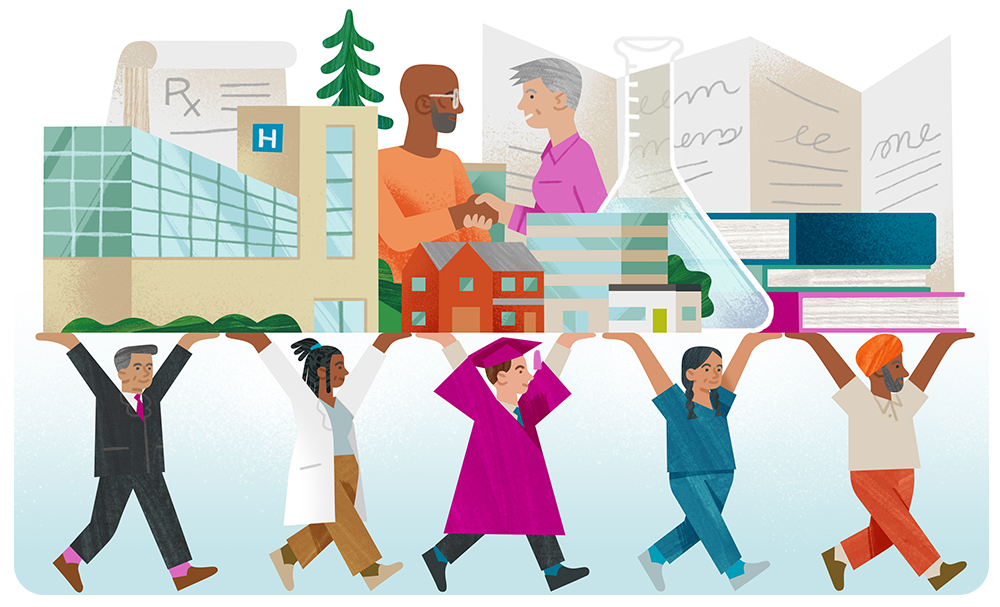
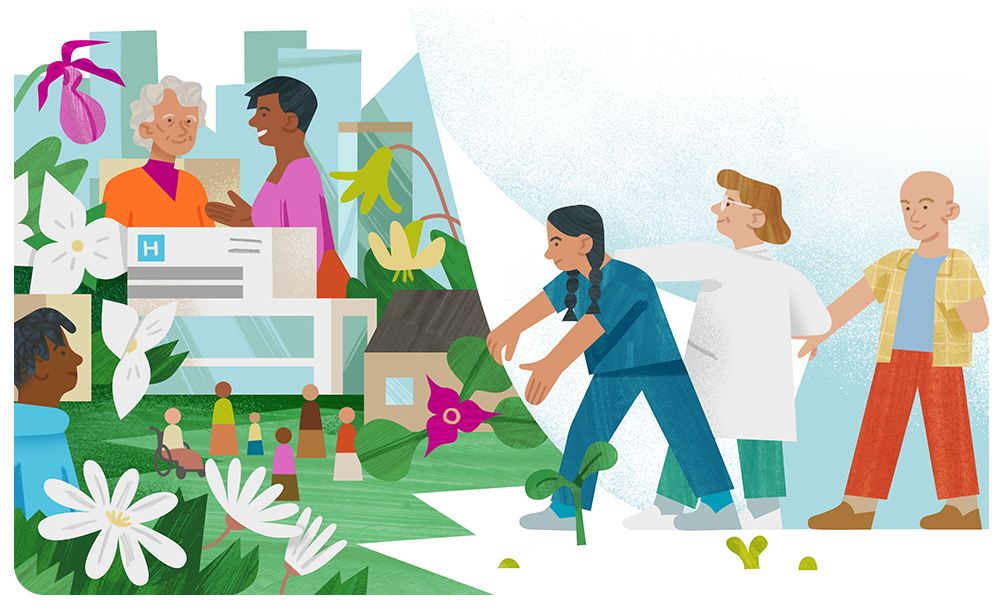
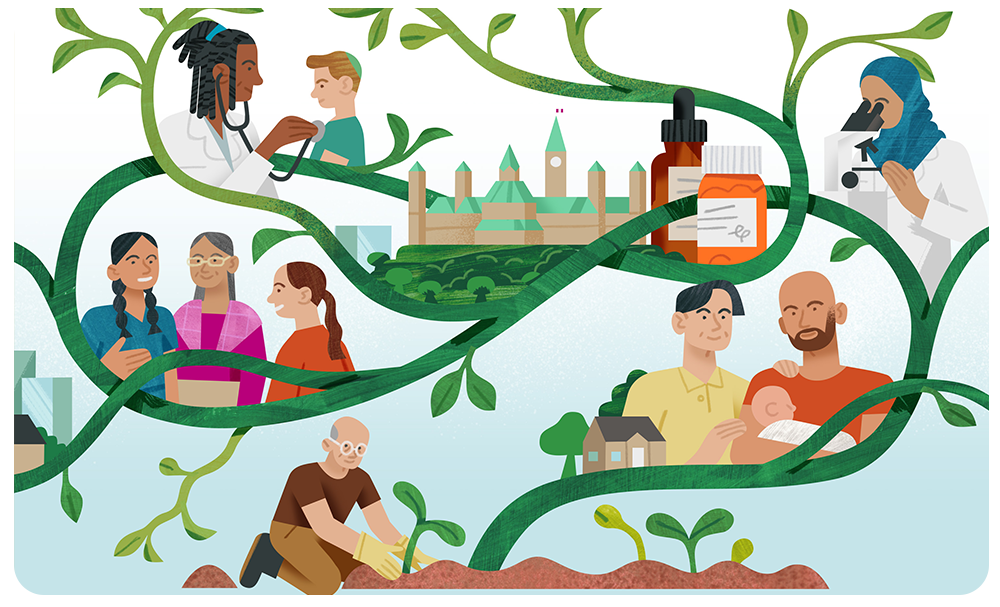
The illustrations depicted in this document are intended to visually convey the role of KM in strengthening the research ecosystem and accelerating research into health, societal and economic impacts. The imagery of landscapes, buildings and interconnected human experiences reflects KM as an active, collaborative process that brings together researchers, communities, health systems, industry and knowledge users/knowledge holders. Elements such as nurturing growth and revealing transformation are meant to depict the beginning of a renewed, enhanced approach to KM at CIHR. The diversity of people and settings is intended to highlight the importance of different ways of knowing, inclusivity and reciprocity, and that the relevance and benefit of research can be optimized when it is co-produced to respond to community and partner needs. The illustrations are also designed to capture that KM is applicable across all four pillars of health research, that it includes commercialization, and that a lifespan approach is valued.
- Date modified: